CharlieKenny.me

people * stories * engagement

  • Putting the work in

    “We haven’t seen Smithy for a while now, Charlie?” Asked Ian.

    I’ve heard the above statement many times from lots of different people regarding those who just don’t ‘get it’ … one-time attendees to our business community. (Just like Smithy) 

    “Community is not for everyone, Ian.”

    The term ‘community’ is something I use more often when discussing our network these days, being established and meeting on at least a fortnightly basis since 2012 … makes sense eh?

    Our sole reason for coming together is to support and inspire, support the business owner and so inspire the opportunity. The given ‘opportunity’ comes in different guises. Some of us see stepping out, attending the meeting itself as the sole reason for qualifying it’s effectiveness. It’s always been tough being a sole trader or SME, so I get it, the value of conversation is invaluable. 

    When working for yourself the feeling that no-one is listening, or that the ‘world has forgotten you’ comes to us all.

    I’ve always said that business is a by-product of effective networking. Not the sole benefit or add-on by any means. There are many benefits, the most valuable (depending on who’s listening) is the opportunity to share. By sharing we’re offering insights, experiences, bringing further education about our business during conversation … becoming even more … valuable

    … we’re enlightening others on the type of person we are, and the positioning of our business, about what makes us both tick, where we’d like to be in the future. Aspirations … We’re educating.

    The clearest opportunity in the early days of community building is the offer of solution(s) to family members. Introducing a helping hand to loved ones through our business community can be especially satisfying.

    Another oft-overlooked advantage of joining a like-minded community is partnership. By putting the work-in, being brave, giving time to the room, we’re reaching a whole new community of listeners. Each of us have the potential to reach new prospects through recommendation. Word of mouth works … if only you give us something to talk about.

    So, yes Ian, it’s a shame Smithy is too busy for more business, seemed like a nice fella, although I never got to know him. Did you?

    The greatest gift is time, if you’re building a community network, the most important ingredient is together-time.

    ‘people buy from people’

  • How do they feel?

    I was in conversation with a business friend recently. I do this a lot, … Sue was going through a rough time qualifying herself as the go-to business-person.

    She felt that all she ever did when promoting her business, was sell.  Endlessly pitching the selly-sell…

    If they don’t know, then how can they make a decision? I asked.

    Before Sue could counter my claim, I reminded her of the basics once more … why are you in business? What is it your company provides?  Most importantly, how do you make people feel?

    Today was a particularly bad day for Sue. I knew she was promoting her business through various presentations recently. Like everyone else, she was busy on the business ‘circuit’ and I wanted her to understand how valuable her efforts were. 

    You are building your reputation, Sue. Repetitive messages over a given people is what it takes.

    I clarified with Sue that we needed to have people believe in the person before they actually invest in anything. Whether our prospects invest their time or hard-earned cash, the first point we needed to address is our own self-belief … are we believable?

    Does your company offer a better way of life, Sue?  

    Is this something you provide? If so, say it, and tell a story of how this has worked in the past.

    Sue nodded in affirmation, she was listening.

    Remember why you do what you do. If it’s to bring yourself and others a better standard of living, then understand what you are offering to your network is worthy indeed. 

    It’s significant, is it not?

    There was silence …

    Once you believe that you have a credible offer, and that you are the in-the-flesh proof of this offer, and the vision of how your company works for your customers … then you should remind yourself, daily – that you have the power to bring the ‘feel-good’ to anyone in business. 

    That’s why you’re taking the message out to as many people as you can, so that they can spread the word on your behalf.

    You are the bringer of good news – and that’s not a bad thing, is it Sue?

    B, but …

    No buts Sue, business is personal.

  • Hoooraaay!

    “Hoooraay!”

    Nicky offered a gleeful cheer and a leap of joy as she declared that today … at what had proved a very quiet trade fair, her start-up business had received it’s very first order!

    Great news indeed.

    “It’s success Charlie, I’m so pleased!” Nicky cried.

    Nicky had every right to be happy. That first acknowledgement of the faith she has in her very own enterprise will stay with her for a long while.

    It’s relief, validation of her actions and in her product and service. It can be tricky for anyone wishing to start their own business. Today’s fickle, competitive, and somewhat demoralising world calls for a tough skin.

    The very process of declaring yourself ‘open for business’ calls for bravery. Although working for yourself doesn’t call for being anything other than transparent. Being yourself. 

    While we understand Nicky’s delight in her first order, isn’t it great news? We should understand that success does not start with the first exchange of cash for goods.

    Some would say success is in the very fact that you step out, decide to start out on your own in the first place! 

    I/we believe that to be true, don’t you think?

    So, that very start. Before we start trading. Even in advance of company formation and bank(?) account, that tricky market positioning and publicity … all that ‘stuff’ is way, way ‘down the line’ in the pursuit of success. 

    We should first turn our thoughts to recognition. By working toward validation from peers that you can be trusted as a credible person and with a viable product … this is the most important ingredient to success. Imagine who they know?

    For, until we have affinity with like minds, those contacts within our business or social sphere … the pursuit of satisfaction through real success may be lonely, and tougher than it should be.

    So, it’s further Hooooraaay!! Congratulations! A warm welcome from all to the business world Nicky, as you work smart building that trusted network.

    ‘people buy from people’

  • Try this instead

    A friend once told me that their best work came when they didn’t know how to do the thing yet. You know, the first time they tried gymnastics they were terrified. The thought of landing badly after the tumble terrified them, but the adrenaline, this made her focus and she scored big points.  The second time? She knew what to expect she was calmer, more comfortable and this is where mistakes were made. Comfort smothered the concentration and ruined the precision.

    We think comfort means safety, sadly in the space where you want to create, comfort is not our friend.

    Comfort is the slippers as opposed the shiny biz shoes.

    Comfort is leaning on “what worked last time” instead of taking the risk of new tumble combinations, variations in movement, new experiments. Comfort is cozy. But it’s also static. And static kills movement.

    The Push and the Pull

    We need comfort in some parts of life. Familiar food. A safe home. Routine. But when it comes to creativity, predictability dulls the edge. To grow, you have to risk the wobble. To create, being bad at something for long enough will get us good.

    Think about when you last learned something new. Whatsapp for one! A camera setting. Curried over poached egg. A musical instrument. You hesitated, maybe stumbled, right? Stumbling is progress. Comfort would have kept you in our seat and stopped you from even trying.

    What to Do Instead

    Pick something you don’t know how to do and give it ten messy tries.

    Choose a responsibility that feels slightly too big for your current skills.

    Shift a habit that’s lost its excitement for something that makes you … nervous.

    It doesn’t have to be massive. Maybe that curry in your cooking. Bare feet instead of slippers. One new way of showing that you care. The important part is that you shake yourself away from the slippers of comfort into the, not so much the gymnastics, but the stretch of creativity.

    Try it with your next presentation. Surprise yourself and give others vision.

  • Quick step or bolero?

    The past few years working for myself have been tough. I’ve noticed a tremendous change in the way people do business. Speaking with friends in my network, they all see the same …

    ​The familiar high-street names have disappeared from local focus. Woolworths, Miss Selfridge, Debenhams to name a few. Sure, some have resurfaced on-line and are doing well, as change continues …

    Today I see opportunity. By looking for a way forward, it’s easy to recognise the landscape of the individual owner/manager. The independent entrepreneur.

    No, I’m not delving into the world of that AI fellow, not this time, although he does figure … I’m talking real world.

    It is the individuals who are growing this vision of new economy, and even though AI has offered a myriad of new skills, bringing the can-do confidence … it is the independent thinker who has the agility to utilise and apply new tech. 

    Isn’t that the way independents have always been successful? Adaptability, mobility? The quick-step over bolero?

    In today’s new-new age, independence seems to be working; there’s success seen for some, although not everyone …

    I’ve heard it is the wariness of unknown threats that affects the confidence of anyone looking to step up. Hey … we’ve all been there, remember? No surprise eh?  

    Brexit, the Pandemic, and unsteady governance. Continued unrest in countries around the world. There is plenty to observe and witness, although if I’m honest with you (the only way to be,) I’m thinking … 

    The biggest difficulty facing independent thinking is that we’re not welcome in the HMRC dystopian world of 2025.  We don’t consume or create enough, independent owner/manager doesn’t pay the taxes.  According to the statisticians, we’re not growing fast enough. 

    To be successful … the 56% of businesses in the UK registered as sole-traders should be brave, even braver than the previous generation. They should hold their nerve as we pursue the new business with confidence.

    Tough times call for an optimistic mindset if we are to prevail. Then, as we’re eventually able to hire and retain staff, create supply lines and embrace the cherished ledger debt so favoured by the accountant … we look toward the future for consolidation. 

    The good news is that we don’t have to step-up on our own. By finding a like-minded network (community/resource,) any business will soon gain confidence to step up and out.

    By having this sounding board of trusted colleagues by our side, we’re able to dream bigger … inspiration comes to the fore as we navigate the brave new world of today’s owner/manager.

    ‘people buy from people’

  • More homework

    So I was talking to Ross who attended networking only a handful of times before giving it away.

    What’s up Ross? Leaving in the middle of sowing season?

    ‘Wha? Charlie, I’ve come along to enough meetings now to understand my market is simply not in the room … I need employers of staff, with production lines or shifts working, or both.’

    Give it time, Ross. Educate the audience on who could use your product or service. Give the audience time to buy in to you, the person and they may bring you business … through the depth of contacts …

    Now, given that Ross was new to the community, he found he was in need of a whole lot of  homework. Being an experienced networker, he was taking the broader, general view that networking was able to cater for all needs, and …

    Sometimes it doesn’t. The audience needs to know more if you are presenting a niche product. Our job is to work smarter if we are committing to a network without letting people down.

    A few years ago I was addressing a meeting of locals from a rural community. Tourism and agriculture were the mainstay of household income. Home support was another, although most of the ‘tool vans’ worked away from home during the week. 

    Now, after stating my case for networking with the farm community, I asked the question:

    ‘Who do you turn to when you need to know something important?’ 

    After a few wise-cracks, the odd snigger thrown in as well, I asked the same question – with the words ‘about business’ tagged on the end …

    We talk to the bank or the accountant. 

    I continued … before you go to the bank etc., who do you confide in?

    You mean apart from the Mrs?  Well I talk to my neighbour, or the lads at the pub.

    ‘Correct.’ I said, and before anyone had time to add something …

    ‘That’s the value of having a network, that’s why we meet regularly, to mull over, take advice, share and begin to ,see more clearly …’

    So at the end of our meeting, I was chatting to one of my new friends who declined my invitation to a place in the new group.

    Thanks, Charlie, I understand what you mean about the networking, but it’s not for me.’

    I’m sorry to hear that, came my reply.

    Yes, well, we’ve been doing it all our lives here (networking) – we’ve all got to know each other pretty well. Good luck with it, though I can’t see networking catching on here.

    I smiled to myself and thought against relating more of the story of time and trust to Ross.

    Shaking hands with Ross, we agreed it was to be the long game given the rural community he was looking to inspire. Communities are built on good, long-term relationships and if you are not prepared to spend time on understanding the depth of that community … then success may not be yours any-time soon.

    People buy from people they know and trust.

  • Foundations matter …

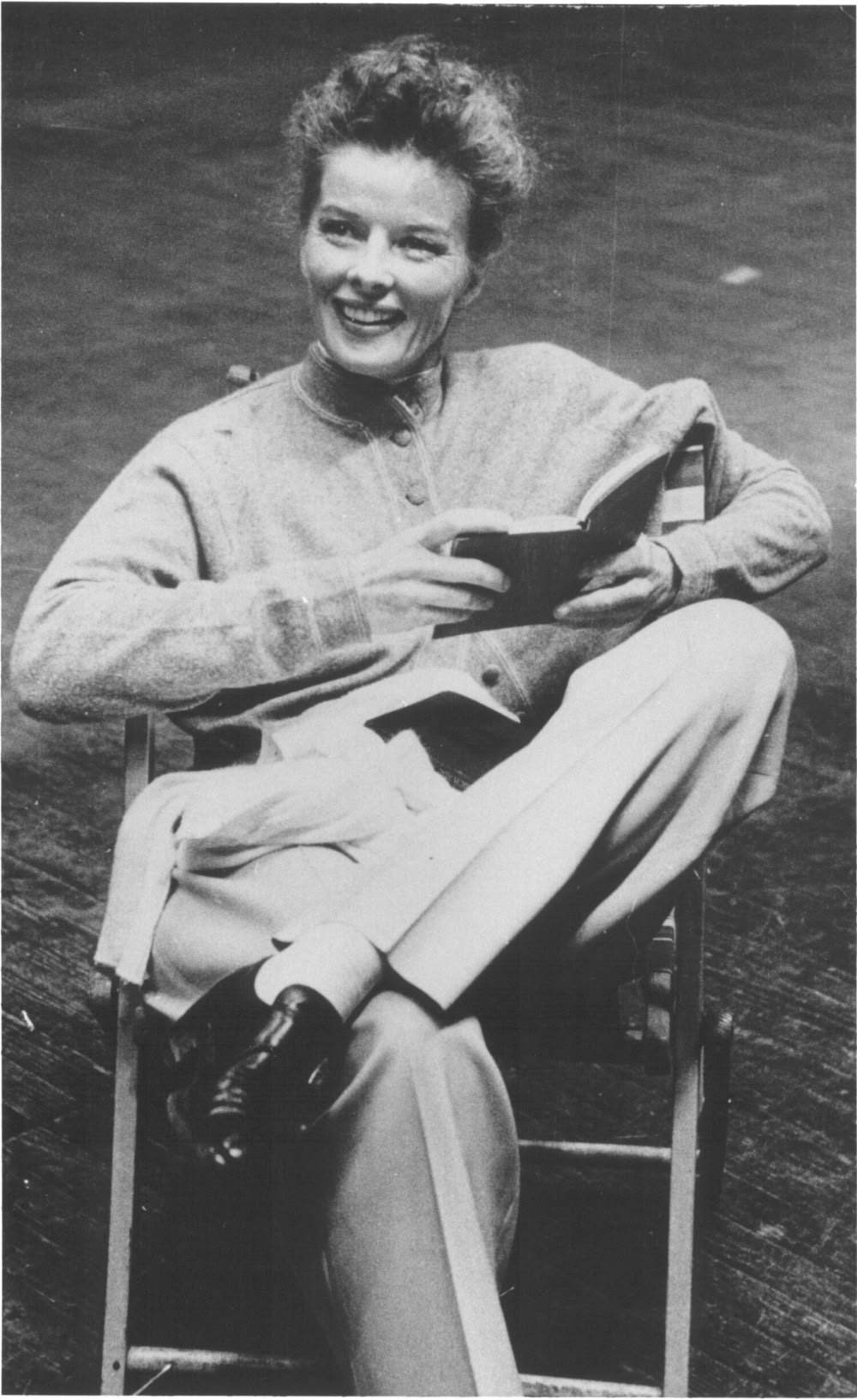
    Katharine Hepburn, in her own words:

    “Once, when I was a teenager, my father and I were standing in line to buy tickets for the circus. Finally, there was only one family between us and the ticket counter. That family made a lasting impression on me.

    There were eight children, all under the age of 12. From the way they were dressed, you could tell they didn’t have much money, but their clothes were clean, very clean. The children were well-behaved, standing in pairs behind their parents, holding hands.

    They were so excited about the clowns, the animals, and all the acts they would see that night. From their excitement, you could tell they had never been to a circus before. It was going to be a highlight of their lives.

    The father and mother stood proudly at the front of their little group. The mother was holding her husband’s hand, looking at him as if to say, ‘You’re my knight in shining armor.’ He was smiling, enjoying seeing his family happy.

    The ticket lady asked how many tickets he wanted, and he proudly responded, ‘I want eight children’s tickets and two adult tickets.’ Then she announced the price.

    The wife let go of her husband’s hand, her head dropped, and the man’s lip began to quiver. He leaned in closer and asked, ‘How much did you say?’

    The ticket lady repeated the price.

    He didn’t have enough money. How was he supposed to turn around and tell his eight kids that he couldn’t afford to take them to the circus?

    Seeing what was happening, my dad reached into his pocket, pulled out a $20 bill, and dropped it on the ground. We weren’t rich by any means. My father bent down, picked up the $20 bill, tapped the man on the shoulder, and said, ‘Excuse me, sir, this fell out of your pocket.’

    The man understood what was happening. He wasn’t being handed charity, but he gratefully accepted the help in his desperate, heartbreaking, and embarrassing situation. He looked straight into my father’s eyes, took my dad’s hand in both of his, squeezed the bill tightly, and with trembling lips and a tear streaming down his cheek, he replied, ‘Thank you, sir. This really means so much to me and my family.’

    My father and I went back to our car and drove home. The $20 my dad gave away was what we had planned to use for our own tickets.

    Although we didn’t see the circus that night, we felt a joy inside us that was far greater than seeing the circus.

    That day, I learned the true value of giving. The Giver is greater than the Receiver.

    If you want to be great, greater than life itself, learn to give. Love has nothing to do with what you expect to get, only with what you expect to give—everything.

    The importance of giving and blessing others cannot be overstated because there is always joy in giving.

    Learn to make someone happy through acts of giving.”

    ~Katharine Hepburn

    ‘people buy from people’

  • Stay where you are?

    After a warm, dry spell of weather, today had turned cooler. Sea mist was rolling across the cricket pitch to offer some respite for the fielding side.

    I turned to my friend Bob sitting beside me as he suggested we move to the back of the pavilion where he thought it maybe more comfortable…

    I think I’ll sit right here, came my reply. Besides, I’m into the game and the change in conditions is sure to bring something different.  I’ll stay right where I am, thanks Bob.

    Bob nodded to me as he stood, pulled on his sweater and clamoured over the rows of seats behind us.

    With my fidgeting friend gone, I was able to concentrate on the game before me. The weather and the change of light had brought a different bowler, the field placements were adjusted to reflect the pace and bounce … and then, with the watching spectators (Bob, myself and one or two others) enthralled, something happened.

    The game gathered pace..

    The new bowler wasn’t to the batsman’s liking. Now, as the man with the bat, abandoning his patience, plays an uncharacteristically hurried shot, … he’s caught behind the wicket…

    The action is witnessed from ‘the gallery!’

    ‘Howzat!’ came the reply from Bob, now ensconced at the back of the shed, pint in hand!

    Isn’t it wonderful what change can bring us?

    Mother nature brings us opportunity with a little impatient action taken, both on and off the pitch. Bob has a favourable(?) refreshing new view enjoyed from the gallery and the conversation takes a turn for the better ….

    There’s a quote by Mahatma Gandi:

    ‘You must be the change you wish to see in this world.’

    Isn’t that a great lesson?

  • Gadgets, lions and parachutes

    PEOPLE WALK AWAY from networking groups for all sorts of reasons. They may not find the time to attend regularly, or might not like the structure of the meeting, the food, or, in most cases, it’s because they’re unable to see the opportunity for growth.

    Give your time.

    The business that joins a collective to share conversation participates in ‘networking.’ The clue is in the word itself, connecting with peers over a given time.

    How soon can you be successful? It depends on the type of business you have. For example, you may be offering the latest ‘gadget’, the most popular gadget that has ever appeared on the market! It’s easy to believe you are going to see good results quickly, certainly before the lion tamer or parachute salesman.

    With the hottest of gadgets in your possession you have an established market, people need your gadgets and so customers come to you! They all want the ‘gadget of the day!’ 

    The lion tamer and parachute guy? 

    With such niche products … it’s a no brainer they could be spending quite a bit of time connecting, delivering messages before ever coming close to new business! A lion that needs taming or even a parachute made for you! Perhaps an inventive insurance agent amongst the network may help?

    Then one day! By the magic of word-of-mouth recommendation, an enquiry arrives. Someone needs a lion tamer … together with a bespoke parachute …

    Give networking time and you will be successful.

    Through the strength of its reputation, the niche business can be as successful as the ‘widget of the day,’

    Success is all about developing our fraternity. Consistency sets the successful networker apart from the ‘chancer’ we often see, you know … 

    … those who “go networking” looking for any new business on the day, declaring as they leave that ‘networking doesn’t work,’ We rarely see them again.

    Take time to learn from each other.

    The ancient Greeks taught that all conversations involved three ingredients: 

    Ethos, or the character of the speaker. Pathos, when the speaker and listener connect through empathy, emotion, and Logos.

    The logos discussed by the Greeks refers to the factual content of the message and use of words. The business.

    Be seen, connect with your listener and give your message time.

    To learn what you need, the listener should hear and trust you before they are ready, willing, and able to listen to what you have to say.

    Networking is not right for everyone, although it’s great for every business.

    #niche #usp #networkingworks #gadgets

  • bring the sunshine!

    Living on the North of England coast, I’m heard often complaining the fact that the sun never seems to linger, there’s often a hint ‘she’s’ on her way at times…

    I mean, we have the odd sparkling day and then I’m forced to realise that even the sun needs to take a rest. 

    I know, we appreciate things a lot more in their rarity.

    It’s the same with people don’t you think? Catching up with good friends, spending time with those we haven’t seen for a while, for me, should be a cause for celebration.

    I’m lucky in that I have a rich and varied group of ‘friends’ and acquaintances who meet regularly. We’re sharing precious time as we renew professional (and personal) stories.  Not everyone can talk about their personal challenges, something I feel is a shame. I hear first-hand that not many head home or back to the office and talk up the meeting of earlier that morning.

    By doing just that … our ‘home team’ becomes part of the bigger picture. They learn more about the ‘why. The support network that surrounds the business owner every time he steps up and out to generate interest through engagement. 

    Business becomes even more personal if we share our stories. 

    Recently, I heard from an old friend who informed me of the passing of a mutual colleague. Achen was someone who started his business not so long ago and was part of the original Weekly Business, a time when we were meeting in London. I remember Achen as being a likeable, softly spoken professional. One of those who, when we hear them speaking, we lean in to take a minute and listen. 

    Achen was a family man. I didn’t know until I heard the sad news that he and his wife were parents to three lovely children. I’m sure those kids will remember their father with the fondness I and many others do. 

    I never met Achen’s wife or family, and it’s times like these I wish I had that opportunity.

    I’m reminded of the value of ‘now’ and living in the moment, the importance of listening to the stories of friends through conversation. 

    Many memories have come out of this moment of sad news . Most important though is the recollection of a man who brought help, support, and happiness to many whenever he walked into the room.

    The sun shines longer when we’re spreading the word and talking up prospects.

  • You, me, us.

    I spent my early youth fending for myself. My mother and father split up when I was twelve years old, leaving my mum to bring up four kids. Poor mum, we kids surely test her wits! 

    I say ‘poor mum’ although she never complained and ensured we all had opportunity for learning and fun. If we kids needed something, we asked. 

    If you don’t ask, you don’t get …  

    Since those early days, I’ve always believed that if I was in need, I should go out and find it by asking for help. Rarely do we meet a mind reader who can conjure up our needs without sharing a conversation, do we?

    I do understand that some people find it difficult to ask. I see it first-hand in my role as host of The Weekly Biz. I’m supporting clients through encouragement. 

    Some of my pals are terrified at the very thought of asking for help … apprehensive when seeking that important special something that would further their business and therefore the well-being.

    Perhaps the bigger ask is scarier than the small favour?

    Back in the day … asking for help was seen by many as rude, it was impolite to ask a favour or burden someone with our needs.

    Times have changed.

    You cannot buy referrals at the local store. Some try bribery while there are those who promise all sorts of business favours in return for introductions “… if you help me, I’ll … etc, etc. ” It’s no wonder that for years, networking picked up bad press. 

    You know, it’s all in the way we do it!

    I’m glad to say things have improved big time. These days most new entrepreneurs understand that it’s good to share face to face. It’s a human thingy to talk with another, sharing emotion, knowledge, it’s empowering. It’s great for the self confidence as well.

    Through familiarity, we relax, life is easier, we’re empowered to be specific, giving colleagues the opportunity to help when they smile, asking ‘How can I help?’

    We need to empower our mates!

    Many people spend their time networking by describing what they do. The same introduction every time we meet up, it’s ‘I’m busy just now with this and that, keeping customers happy with stuff … when more importantly, we should be introducing that most important denominator – you/me/ourselves.

    Everyone is busy talking busy, so let’s talk about us.

    By sharing with our friends, introducing our personal story we’re cultivating important relationships.

    Trust is developed as we all understand that people buy from people.

    Ask your friends …

  • Now is the time …

    It’s official, the end of Spring is imminent here in the UK.

    Where did that go?

    In turn, I’m now wondering how I haven’t managed to plant next season’s veg? The spuds, carrots, and greens I promised last year aren’t in the ground yet. I now beginning to feel a little left behind … although it’s not too late!

    I need to prepare now.

    Preparation for the future can be managed if we are mindful. By living in the moment, we can do a little each day to prepare for the future, whether for the business, our health and of course the garden.  The seed is you.

    In conversation with Liz last week she was saying how guilty she felt when taking time away from the business day-to-day to look after the family.  We agreed that passion plays a big part in our commitment to the future. Family is always going to be the main priority. Business? For many, business is part of the family. Our work is often a lifestyle we choose to spend the majority of our time on. It can become all-consuming for those passionate about its well-being.

    There’s a balancing act that many of us play. We can share our time.

    We learn the routines of family life and set aside time for certain necessities. 

    Business being seasonal, we look to the busy times when our offer may be in demand. Then, when it’s not so busy, we develop and nurture what we have to make us more competitive, more attractive to the market. We further our reputation.

    The same goes for networking. Those of us who have spent time cultivating relations understand that the meaningful business may take a little time to present itself. As we look to establish our position of authority, we are the go-to person in the room. Trust takes a while to develop before others consider recommending your trade or services.

    Cultivating a network of support means that we offer our time freely. Sharing our skills and experience through story-telling. Those who walk away from the network after only a few short weeks are not cultivating, they’re hunting for the opportunity. Once they’ve succeeded in gaining an order or two, we rarely see them again, they’re off hunting elsewhere.

    Therefore, to garner any kind of success, think gardening.

    If we tend our patch, prepare the soil, plant the seeds and feed the bed regularly, we may end up with a healthy return on our efforts.

    That’s how we become a reliable business connection. Prepare now, understanding that business is seasonal.

  • Too busy for biz …

    It was set up to be a vibrant morning for breakfast networking. The sun was shining, our venue was organised and ready for a good number of guests, when to my great surprise, Mike had arrived to join the throng.

    We hadn’t seen Mike for a while, it must have been six weeks.

    ‘How are you doing Mike? Long time no see.’

    ‘Hi Charlie, yes I’m well, a little too busy that’s all. How about you?’

    ‘I’m all the better for seeing you Mike, have you been fielding my invitations to the networking, I did follow up via SMS as well?’

    ‘Yeah sorry, mate, I’ve had to take a back seat as we’ve a particularly needy client who has demanded all my time …’

    ‘Mike, how important is future business? We meet to nurture those relationships and reliability for the referrals. When someone isn’t communicating, the only message we hear is that they don’t care.

    Not the way to treat future prospects is it… what can we do to help?’

    ‘Yeah, I know Charlie. I’m only here this morning to catch up with one or two … once things settle down I’ll make a return.’

    Thankfully myself and others in the network, finding themselves in a similar situation to Mike understand that increased business is a by-product of networking. We expect to grow through regular contact and developed trust. To ignore your network due to being too busy for further business signals that Mike is a little unprepared for the results networking may bring. 

    Here’s some simple guidelines to ensure your time networking isn’t similarly wasted:

    • Treat people how you would wish to be treated yourself
    • Develop your circle of confidantes
    • Stay in touch
    • Be present for referrals (don’t be too busy for business!)
    • Recommend network colleagues to friends and family
    • Follow up on promises, so ‘cultivating the reliable’

    Mike has always been a popular guy within the group although he hasn’t helped his future business prospects through neglecting the relationships.

    Business is personal. By being reliable you make yourself referable.

  • Innovation, endurance

    A few of us met up for coffee after our networking event where I asked Norman what was the main part of his business. He has many interests, from electric bicycles to promotional items to his own range of board games. What keeps your business ticking over Norman?

    ‘It’s difficult to say, you know. If I’m lucky with an order for a state-of-the-art electric bike, this can float the business for a few months. More so my passion is the pin badges and magnets I produce for customers.’

    ‘It’s the variety, that’s what gives me enjoyment. We should enjoy what we do, don’t you think?’

    I agree, I started. It’s not a passion if you aren’t getting any enjoyment. It sounds like your ‘endurance items’ provide you with the passion so lacking in many workplaces today?

    ‘Endurance items?’ asked Norman.

    Yes, those promotional badges were once referred to as ‘endurance items’ way back in the ’90s.

    Norman was on the case – not wishing to miss an opportunity he consulted his mobile and searched online ‘endurance items.’

    Nothing.  ‘Sports supplements’ and other things Charlie – there’s nothing about badges?

    Norman and I discussed that ‘back in the day’ the ambitious sales-person would always welcome the opportunity to offer promotional hand-outs. Trade shows were a great place to collect a handful of freebies. We called these endurance sales items in the trade.  Nowadays these are referred to as simply giveaways, appreciation tokens or swag.  

    Norman’s promotional badges would have been called similar. Another sales endurance item.

    Success in business is about talking the language don’t you think?  This skill comes with time and hearing enough messages to learn what to listen out for. Networking is great for that.

    Today’s conversation was a reminder from Norman’s ingenious offer that we can never stand still in business. With so many challenges as we endeavour to make a living, the savvy business owner, whether sole trader/entrepreneur or thriving SME need to be thinking innovation.

    What’s our difference? How do we attract more interest in the skills we are providing?

    Success has always been about who we know.

    While technology today has stolen a lead on many of the traditional forms of business offerings … it may have even sounded the death knell to many of those lacking the vision to move on … it’s comforting to know there may still be room for innovative people to step up and move forward.

    Today I’ll thank networking, that opportunity that never goes away. Plus of course Norman for putting me back on the ‘straight and narrow!’

  • Speaking the lingo

    Janice and I were waiting for a train, talking progress over pots of tea the other day.

    I’d managed to load BAD BOY, a book by Kevin Clarke to a new publishing platform while my friend Janice was considering promoting her new business. She was looking to do some advertising.

    Janice has been in business only twelve months and she was eager to gain more orders for her design services.

    ‘Have you considered ‘word of mouth’ Janice, working alongside a mentor?’

    ‘Er, no Charlie. I’m not ready for that step yet. I’m confident I can ‘get there’ on my own … What does a mentor do anyway?’

    I explained to Janice my own thoughts on networking, collaboration, and the whole ‘people buy from people’ principle. It works by learning from those within our circle, those who may be ahead of our own business curve through experience, learning as they go. 

    I saw the look of enlightenment cross her face as Janice asked …

    ‘Where do you meet Charlie?’

    As it happens, Janice is at the other end of the country, so unable to meet at our in-person meetings. I did ask her along another time, when I’d introduce her via the regular Zoom call …

    I felt the reality check with Janice very satisfying for me. On reflection, our conversation made me realise I’d learned something from someone 40 years my junior. 

    Over the rim of the tea cup I saw that being in business for over 25 years, I so often overlooked the opportunity …

    … those regular scheduled meetings with others who have similar experience to mine is invaluable. The conversation flows as we share so much, we talk the same language through experience.

    Apart from the conversation, we learn that we’re never alone in our business pursuits. The reality-check is that we’re never too young (or too old) to learn new things by engaging in conversation with colleagues.

    Networking isn’t always about the next order, that’s yet another by-product of networking.  

  • My shout.

    I’m going to the pub, Charlie.

    A friend of mine is struggling to come to terms with ‘starting again.’  These past few months Nancy has felt her business not ‘going anywhere.’ Now she feels the need for reinvention, by trying something new.

    Is that so strange? I hear you say …

    After all, as self-employed entrepreneurs, we have the ability to pivot. There’s no contending with a ‘corporate’ depth of structure. We’re flexible, and for many, we’re able to ‘scale to fit,’ so adapt to the journey.

    I’m going to try my hand at being a publican, Charlie. What do you think? Said Nancy.

    I did detect a smile. Now, given Nancy had been in the care industry these past several years, you’d be forgiven to think that support of a different kind would be … well, second nature, wouldn’t you?

    Nancy, I asked. How long have you been in business?  

    Two years, Charlie.

    You do understand the good things take time don’t you … why not stick to what you do best?

    You mean two years of perseverance isn’t enough?

    I mean the time it takes to establish who you are, what you do and how you offer solutions to particular problems. Those two years you’ve spent developing relationships …

    Yes, I’ve met some great people. It’s just that I can’t see any meaningful business coming my way, Charlie.

    Here’s what I mean, Nancy …

    The two years you’ve’ invested’ in your new venture. Think of the word ‘invested’ Nancy …

    The time we spend engaging and telling the story pays off only when we maintain consistency. The investment in people and the potential in the connection is often missed when we start up Nancy. You know it’s about who your contacts may know, not what they, themselves, are buying, don’t you?

    Yeah, I see that, Charlie. It’s the results just seem like such a long time coming along.

    be bold, share the story

    Nancy, word of mouth favours the bold.

    You and your prospects are considering investing in each other every time you meet. The reality is there are many influences we should consider when looking for success. 

    Is what you offer needed? Is it urgent? Is now the right time?  Do you have what they need and … are you able to do the job? Depending on who you talk to, success does take time.

    OK, I get it Charlie, it’s about connections.  What do we do now?

    Well, why not let’s take a look at that pub you were fond of joining and see who we meet today?

    Your shout?

  • Look on the bright side

    No, this story isn’t about the film ‘Life Of Brian.’

    Here’s a reflection from a friend of mine I’d like to share with you … nothing to do with the movie mentioned above although there are certain similarities.

    My story reflects on Brian Lever, a professional chauffeur. He and I were talking the other day as he waited for his next fare. Brian is in the people business and we shared a lot in common as we discussed all things topical. 

    Brian lost his job two years ago after 30 years as an Account Manager with a household name. 

    ‘The company were looking at saving costs, and as you and I know Charlie, staffing is a huge overhead to any business. Anyway, I’d spent my working life supporting corporate clients, large and small. I was responsible for 350 customers. In their wisdom, the Company informed me and hundreds of others that we’d lost our jobs. We were making way for ‘a new incentive.’  

    In their wisdom, the Company was to outsource my sales responsibilities. ‘Cost saving’ included bringing in teams of telephony staff to carry on the work of people like me.’

    I sympathised with Brian, I could see he was deeply aggrieved to have been ‘let go’ after such a long time in service.

    We continued talking …

    You know what though, Charlie?  The company plan didn’t work.  There was a u-turn and last month myself and a handful of my former colleagues were offered our jobs back. The same roles, more autonomy, and generous incentives.  It appeared the ‘new teams’ were lacking in something important …’

    It seems the faceless voices on the telephone couldn’t duplicate the in-person experience. The affinity or emotional connection one person has with another.

    The Company had realised the true value of trusted, knowledgeable staff. In the eyes of the customer, the person IS the company. The trusted relationships cultivated over many years are the CORNERSTONE for ongoing business.

    Our Brian story is not so much the ‘Life Of Brian’ satire. It’s more like a tragicomedy seen all too often in today’s business world as tech tries, unsuccessfully, to replace human interaction.

    People buy from people, because business is personal. 

  • Happiness 365!

  • Know what you want?

    I was twelve years of age when I realised I needed to work for a living. How about you?

    It was the time I’d started secondary school. All my friends were riding cycles to and from school and so, naturally, I thought life would be so much better if I was able to ride instead of walk the 2/3 miles to be with friends.

    So, I did what most kids my age did – I asked my dad if he would buy me a bike. 

    ‘Perhaps wait until Christmas,’ came the response from dad. ‘Besides, if I go out and find a bike for you, then your brother will need one as well.’

    ‘But dad, he doesn’t start ‘big school’ until next year …’

    ‘I tell you what, Charlie …’ Dad began…

    ‘I’ll buy you half a bike if you can raise the money for the other half. If you can do this, you shall have what you want.’

    Of course, I hadn’t  a clue where to start, although it didn’t take me long to realise I’d need more money than I had in my possession, to purchase ‘half a bike.’

    That said, I knew better than to argue with my father … I’d try Mum instead.

    ‘Charlie, if it’s important you need to try and find a job after school, or at the weekend?’ Came a sensible reply.

    So, I busied myself knocking on doors offering my services for odd jobs. Before long, I found that by running errands, collecting rubbish and helping out around the house … with a garden tidy, or washing the neighbour’s car, the collective small sums soon set me on the path to ‘entrepreneurship.’

    The next endeavour was the summer lemonade at the end of the driveway, I even had a ‘trusty’ helper in my brother who soon learned the value of partnership. We then progressed to delivering leaflets … then, by the Autumn I was offered a ‘paper round,’ if I had a bike!

    Now, I hadn’t all of the money that paid for a bicycle, although one morning, to my amazement, there on the porch was the bike I’d been working for.

    ‘That’s reward for all your effort, Charlie. Said Dad.  By making yourself available for work and becoming reliable, you’ve put yourself in a position for further opportunity. Good for you! Now work on that paper-round so we might save something saved for your brother’s bike, eh?

    These days I don’t have a ‘paper-round’ although I do sometimes yearn for those simpler times.  Today I am always ready to tell (a condensed version) of the above story if anyone ever queries when they are likely to see a return on their efforts while business networking … 

    Networking meets you halfway.

    Such as life, we see a return on what we put in, right?

  • This is the elemental speaking: It is during phase transition — when the temperature and pressure of a system go beyond what the system can withstand and matter changes from one state to another — that the system is most pliant, most possible. This chaos of particles that liquefies solids and vaporizes liquids is just the creative force by which the new order of a more stable structure finds itself. The world would not exist without these discomposing transitions, during which everything seems to be falling apart and entropy seems to have the last word. And yet here it is, solid beneath our living feet — feet that carry value systems, systems of sanity, just as vulnerable to the upheavals of phase transition yet just as resilient, saved too by the irrepressible creative force that makes order, makes beauty, makes a new and stronger structure of possibility out of the chaos of such times.

    Light distribution on soap bubble from the 19th-century French physics textbook Le monde physique. (Available as a print and as stationery cards.)

    Cultures and civilizations tend to overestimate the stability of their states, only to find themselves regularly discomposed by internal pressures and tensions too great for the system to hold. And yet always in them there are those who harness from the chaos the creative force to imagine, and in the act of imagining to effect, a phase transition to a different state.

    We call those people artists — they who never forget it is only what we can imagine that limits or liberates what is possible. “A society must assume that it is stable,” James Baldwin wrote in reckoning with the immense creative process that is humanity, “but the artist must know, and he must let us know, that there is nothing stable under heaven.” In the instability, the possibility; in the chaos, the building blocks of a stronger structure.

    A century of upheavals ago, suspended between two World Wars, Hermann Hesse (July 2, 1877–August 9, 1962) considered the strange power and possibility of such societal phase transitions in his novel Steppenwolf (public library). He writes:

    Every age, every culture, every custom and tradition has its own character, its own weakness and its own strength, its beauties and ugliness; accepts certain sufferings as matters of course, puts up patiently with certain evils. Human life is reduced to real suffering, to hell, only when two ages, two cultures and religions overlap. A man of the Classical Age who had to live in medieval times would suffocate miserably just as a savage does in the midst of our civilisation. Now there are times when a whole generation is caught in this way between two ages, two modes of life, with the consequence that it loses all power to understand itself and has no standard, no security, no simple acquiescence.

    We too are living now through such a world, caught again between two ages, confused and conflicted, suffocating and suffering. But we have a powerful instrument for self-understanding, for cutting through the confusion to draw from these civilizational phase transitions new and stronger structures of possibility: the creative spirit.

    Hesse observes that artists feel these painful instabilities more deeply than the rest of society and more restlessly, and out of that restlessness they make the lifelines that save us, the lifelines we call art. A century before Toni Morrison, living through another upheaval, insisted that “this is precisely the time when artists go to work,” Hesse insists that artists nourish the goodness of the human spirit “with such strength and indescribable beauty” that it is “flung so high and dazzlingly over the wide sea of suffering, that the light of it, spreading its radiance, touches others too with its enchantment.”

    The Dove No. 1 by Hilma af Klint, painted during World War I.

    Often, they do the nourishing at great personal cost. He considers what it means, and what it takes, to be an artist:

    You will, instead, embark on the longer and wearier and harder road of life. You will have to multiply many times your two-fold being and complicate your complexities still further. Instead of narrowing your world and simplifying your soul, you will have to absorb more and more of the world and at last take all of it up in your painfully expanded soul, if you are ever to find peace.

    Most people, Hesse laments while watching his contemporaries, are instead “robbed of their peace of mind and better feelings” by the newspapers they read daily — the social media of his time — through which the world’s power-mongers manipulate our imagination of the possible. “The end and aim of it all,” he prophecies, “is to have the war over again, the next war that draws nearer and nearer, and it will be a good deal more horrible than the last.”

    That is what happened. The next war did come, the world’s grimmest yet — a phase transition that nearly destroyed every particle of humanity. And yet something was left standing, stirring — that same creative force that made of the chaos a new era of possibility never previously imagined: civil rights and women’s liberation, solar panels and antibiotics, One Hundred Years of Solitude and Nina Simone.

    On the other side of that war’s ruins, another thinker of uncommon depth and sensitivity considered the role of the artist and of art in the collapse and reconfiguring of civilizations. In a 1949 address before the American Academy of Arts and Letters, later included in his lifeline of a collection Two Cheers for Democracy (public library), the English novelist, essayist, and broadcaster E.M Forster (January 1, 1879–June 7, 1970) celebrates the stabilizing power of art in times of incoherence and discord:

    A work of art… is the only material object in the universe which may possess internal harmony. All the others have been pressed into shape from outside, and when their mould is removed they collapse. The work of art stands up by itself, and nothing else does. It achieves something which has often been promised by society, but always delusively. Ancient Athens made a mess — but the Antigone stands up. Renaissance Rome made a mess — but the ceiling of the Sistine got painted. James I made a mess — but there was Macbeth. Louis XIV — but there was Phèdre. Art… is the one orderly product which our muddling race has produced. It is the cry of a thousand sentinels, the echo from a thousand labyrinths; it is the lighthouse which cannot be hidden.

    Art by Nina Cosford from the illustrated biography of Virginia Woolf, who wrote To the Lighthouse in a transitional time.

    Because art is the antipode to the destructive forces sundering society, the artist — endowed with the personal and political power of the sensitive — will invariably tend to be an outsider to the society in which they are born. A decade before Auden observed that “the mere making of a work of art is itself a political act,” before Iris Murdoch observed that “tyrants always fear art because tyrants want to mystify while art tends to clarify,” Forster writes:

    If our present society should disintegrate — and who dare prophesy that it won’t? — [the figure of the artist] will become clearer: the Bohemian, the outsider, the parasite, the rat — one of those figures which have at present no function either in a warring or a peaceful world. It may not be dignified to be a rat, but many of the ships are sinking, which is not dignified either — the officials did not build them properly. Myself, I would sooner be a swimming rat than a sinking ship — at all events I can look around me for a little longer — and I remember how one of us, a rat with particularly bright eyes called Shelley, squeaked out, “Poets are the unacknowledged legislators of the world,” before he vanished into the waters of the Mediterranean… The legislation of the artist is never formulated at the time, though it is sometimes discerned by future generations.

    This, he assures us, is not a pessimistic view — it is a kind of faith in the future, made of our creative devotion to the present. (I am reminded here of his contemporary Albert Camus’s insistence that “real generosity toward the future lies in giving all to the present,” and of C.S. Lewis, who reckoned with our task in troubled times from the middle of a World War to remind us that “the present is the only time in which any duty can be done or any grace received.”) Forster writes:

    Society can only represent a fragment of the human spirit, and that another fragment can only get expressed through art… Looking back into the past, it seems to me that that is all there has ever been: vantage-grounds for discussion and creation, little vantage-grounds in the changing chaos, where bubbles have been blown and webs spun, and the desire to create order has found temporary gratification, and the sentinels have managed to utter their challenges, and the huntsmen, though lost individually, have heard each other’s calls through the impenetrable wood, and the lighthouses have never ceased sweeping the thankless seas.

    With thanks to Maria Popova, The Marginalian.
  • When it gets a little wacky!

    Recently I’ve had recurring conversations with people who feel off track with their goals and unsure where to put their time and energy.

    It happens at this time of year doesn’t it? The fact is, when we feel stressed and overwhelmed, we sometimes forget to do the things that help us.

    We all have some simple systems that have always supported us, especially when things get a little ‘wacky.’

    Whenever I feel like I’m wobbling or a bit lost on what to do next, that’s usually a sign I’ve let some of my core habits and systems slip.

    It’s a sure sign I need to return to what works.

    To give you an idea, here are a handful of things that help me stay on track or, in this case, get back on track.

    Write stuff down – I’ve said it before. Journaling is like having a personal therapist right beside you. Sadly though, when stress levels rise, my instinct is to ignore the therapy stuff and leap straight into work. I shouldn’t but that’s what I do. Writing stuff down, usually in the morning is one of the most helpful things I do to make sense of thoughts, stuff going on in my brain.

    At the end of each day? I handwrite my plan for the next. It’s good grounding, you know the feeling? Too much to do can keep us from doing it, when it’s exactly what I need to stay focused and productive. Write stuff down!

    Take a break, hydrate!  The benefits of drinking water are well established. It’s silly, but it’s one of the things I forget to do, like going for a walk …

    Clear junk! – Messaging. It’s important, right? I see the most important messages helping me stay on top of the most important communication and get in and out of my inbox quickly. If after a couple of days I haven’t acted on some of the mail inbox – I delete them, creating space …  there’s plenty to help ourselves, helping friends is also a great way to do that, help ourselves.

    I do understand these are all pretty basic, but that’s the point.

    These are simple systems that support me. And there are simple things you do in your way that help make things run smoothly.

    So let’s not abandon the routine support systems we need most, remember, they work – and are cheaper than the therapist!

  • Don’t look back

    Are you wondering how you might fare when choosing to ‘work for yourself?’

    Each of us ‘work for ourselves’ whether as an employee, a sole trader or a company director. We’re all looking to build better through personal experience.

    In this instance though, let’s look at one or two reasons why being a freelancer makes you stand out from the crowd:

    1. Your name is on the can!  You have the luxury of focusing on business your way. Deciding where to concentrate your efforts and for how long. You are seen to be in control, which allows your expertise and dedication to shine through … often making a lasting impact on clients.

    2. You have the power!  Forget the red tape and party politics. When working directly with clients, there’s a personal connection that fosters collaboration through trust. There are fewer middlemen – leading to more transparency!

    3. Opportunities that suit your skillset!  As someone with a certain set of skills, you are a valuable connection to any thriving business. As opposed to in-house teams you have a select expertise that is highly sought after.

    4. Flexibility. As a freelancer, you’re able to manage your schedule. There’s more productivity, an efficiency at every level, from the dialogue to the production/supply process. This leads to greater customer satisfaction.

    5. Recognising your Value. Many larger corporations and agencies rely on freelancers to handle overflow projects. By offering your services directly, you cut out the middleman and unlock the full value of your talent. It’s easy to overlook the value we bring. Take pride in knowing that freelance expertise is in high demand; clients show a high appreciation of the added value you bring to their projects.

    Most importantly …

    6. Look forward to growth! As an independent, there’s the opportunity to develop valuable relationships with clients. Through direct collaboration, over time, you establish a network of satisfied clients who refer your skills to others. 

    The greatest compliment is a recommendation delivered by word of mouth. Embrace those skills you have, Knowing that, as a freelancer, your skills are highly sought-after and form a valuable part of the economic impact. Wherever sector you represent, your business will always thrive through transparency and collaboration.

  • Look again
  • Who said that?

    Remember the days before regular networking? When working for yourself, you planned the day the night before, where to go, and who you may need to speak to with a view to inspiring interest in what you have to offer? Constantly working on ‘leads.’ You do? Me too.

    In reality, life before networking has never existed. 

    Mankind has been gathering in communities (tribes) of like-minded groups to share views, and advice,developing relationships since time began. It’s where we take succour and comfort, it’s where we develop, amongst a whole host of other things, a reliable reputation.
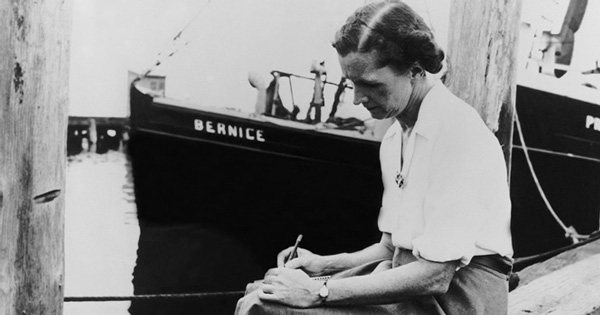
    Planning the day the night before?  Not if you are a networker. Those in business who are connected, with a regular date for business development and support have skills attained through vision, one of the many benefits of conversation.
    Every day we’re able to build new business around networking. Think about it, if we reach out to someone sharing a common goal, perhaps offering support via new contacts, we set ourselves tasks. The smartest embrace those tasks and set about fulfilling them.

    The most successful networkers? It’s those who create multiple objectives on their to-do list. Objectives are opportunities to help someone at each meeting we attend. Smart business people create busy, business …

    Not only to benefit themselves but because those that they help remember the positive support and so pass that good impression on. That’s how we become a valuable member of a tribe, being someone who offers help and inspires others to give support. 

    Strong communities are created by pro-active networks, we see this in the social media world – those with the likes/the followers inspire more of the same.

    Therefore before you dispel the benefits of structured in-person networking … consider where your next important piece of business is coming from. Think to yourself, ‘How do I get there?’

    Most likely it’s ‘Chinese whispers,’ yes, through word-of-mouth. Perhaps your reputation as a pro-active problem solver, happy to help others has reached the ears of someone new … through networking.

    ‘People buy from people.’

  • Only on Monday

    I’m lucky to have met some lovely people through networking. There are many, of course, who move on as the job or career takes them out of my immediate contact zone. Although, I’m very grateful to have connections with whom I’ve developed strong relationships I can rely on. I count these as my friends.

    It’s comfortable when we do business together as friends. Don’t you think? It’s easy because we share time, know each other, and share similar values. There’s a level of trust because we’ve been lucky to see each other develop a sense of commonplace.

    Finding myself grateful for a strong community in my network didn’t happen overnight.

    There are, of course, some days when it’s easier to feel gratitude than others. Monday comes to mind. For example, sometimes people can frustrate you. Perhaps, they’ve disappointed you, or they let themselves down by not reaching out to others when the opportunity presents itself. Some are quick to blame others for not meeting their goals, we see that often don’t we? 

    I think that taking a deep breath, and looking past the disappointments to find the gratitude for the good things we see in other people helps a lot with patience.

    Patience is an important part of gratitude.

    Patience starts at home. On a bad day (yes, I get them too) I’ve made it a habit to take moments to myself for gratitude. I like to step away from the chaos, only for a moment, giving myself a better opportunity to recognise the good things happening. Not necessarily starting a gratitude journal or going to meditate … the separation alone is often enough to get me thinking. I like to step out with the dog or step over the bike; getting a little exercise and breathing fresh air helps me remember and appreciate the good things.

    Although like you, there are times the pace of life takes me past the time for a break. That’s easy when we’re working all-in, we forget that we are all products of our efforts …

    Here’s something to remind you to cherish the ‘attitude of gratitude’

    • Think of one thing you’re grateful for. Then write it down and share it with a close friend.
    • Incorporate gratitude into your regular presentations. Ask others to share “I’m grateful for ____.”
    • Make time every week to personally express your gratitude to someone in your network either verbally or in a written note.

    Because, ‘people buy from people.’

  • Tattlers are good!

    “I’ve so much on right now Charlie, there’s no time for networking.”

    I was attempting to have a conversation with self-employed Bill. He’d recently returned from holidays and coming to terms with ‘picking up the pieces,’ (his words, not mine.)  Bill set up his car refurb business a few months back and he was busy with a full order book … until August arrived.

    I pointed out to Bill that the holiday months have proved a good time for opportunities in the past. With fewer demands on our time, there’s more clarity. There’s more time to assess the business direction.

    ‘Not forgetting Bill … 

    Your existing clients are back to business soon, so before long there’s a new season. The commuter transport will need to be ready – and who knows, you may not have time for new business, let alone networking?’

    Bill then confided in me…

    “You see Charlie, I don’t like talking about myself, I prefer to remain anonymous.”

    I admitted to Bill that this was once my preference. I’d advertise, pick a listing in a directory, even a mail-drop.Anything but cold call, in person.

    This was well before social media. Even now there are times I shield myself behind my logo.

    “So what drove you to Networking, Charlie? I couldn’t think of anything worse than standing up in front of a room full of strangers.”

    I could tell Bill was a little less agitated now, he was looking to talk.

    ‘There was a time I was looking for an antidote to the selly-sell of social media marketing, Bill. 

    I accepted an invitation from a friend. She made me realise that networking may not be right for everybody although it’s right for every business. 

    The day arrived and I was apprehensive, the same as you would be Bill. I’d heard exaggerated stories of public exposure and humiliation although I trusted my pal, who said:

    If it helps Charlie, don’t talk about yourself. Instead, mention a friend with a particular need or who is looking for support.’

    Bill replied, “I thought networking was about you, growing the business Charlie, not someone else?”

    You’re right. Networking should be easy – and over time it becomes easier.

    By talking of something else other than yourself we take the pressure off. Declaring support for someone else exposes the human element. Networking is about showing that you care.  

    What goes around comes around … once people know and trust you.

    Build your reputation by understanding that ‘people buy from people’ and networking will help you.

  • It’s not about the fry-up!

    I was speaking with Toni a few days ago, she’d called me to enquire about the format to the Tuesdaybiz networking.

    “Most welcome Toni. It’s an early start, 7.15 until 9am. It’s a structured meeting, allowing each attendee a few minutes to introduce themselves and the organisation. No member fees, the only cost is the room hire @ £10 p.p.”

    ‘I’m assuming breakfast is included Charlie?’

    Definitely, tea, coffee and a good selection from the menu. We ensure the breakfast is over before the presentations. I replied.

    Toni chuckled lightly. ‘As long as they do the English breakfast, I won’t be able to stay long. I’ll come along for the fry-up and introduce myself, although I need to be away by 8.30.’

    It’s likely not for you this time ’round Toni. I replied. The meeting format is in place to allow for introductions and in turn the reply. Everyone has the opportunity to provide input as we follow up on the conversation with the reply at around 8.30 … right about the time you wish to leave. Come along when you can offer your time, Toni.’

    ‘Don’t get me wrong, Charlie,’ Toni replied, almost hesitating. ‘I’d like to visit to see what transpires although Tuesday morning is a busy day for me …’

    Toni, I’m going to suggest ‘come along when you have the time’ it will give you a better impression. We do have guests simply coming over for the fast-fry breakfast, so it works for some, at Tuesdaybiz we just ask that you stay for the full meeting! 

    You may be a trader of goods, or be a busy hobbyist. There are Networking groups that cater for those who drop-in once in a while, looking for the quick fix, Toni.  

    Ours is a regular meeting. We get to know each other well, understanding the people who run the business as well as the business itself, ensuring we’re able to give and receive referrals in confidence.

    Bear in mind those who enjoy our meeting know that results come over time. I’d describe the process more akin to the ‘slow cooker’ other than the fry-up, Toni.’  

    ‘people buy from people, Toni.’

  • Help me, help you!

    Without question, the biggest obstacle to new business progress is overcoming the lack of confidence.

    Who can blame us? I hear you say. 

    After all, these past few years have been tough for many, especially those working for themselves … by themselves. Navigating an uncertain, fast-changing business landscape calls for a special kind of fortitude.

    Would you be surprised when I suggest the lack of faith in one’s ability to find the confidence, and courage to step up and seek help is more common than one might think? 

    No, I didn’t think so.

    Sure, there are some with an abundant number of clients, with a depth of staff. Maybe they have a strong reputation and so are cash-rich. Perhaps they’re content, never worked on the business, they’re happy with the existing status quo and aren’t in a position to be looking for new clients. 

    The successful, well-established business have their own set of challenges to address. Staffing, client support, cash flow and reputation management to name one or two. 

    Challenges similar to the start-up but on a different scale …

    No matter what industry we’re in or where our careers take us, we all face obstacles at some point and are challenged to address them. 

    Some see failure to follow up as being a sign of weakness. 

    I’m not so sure, simply because we’re all very different humans. It’s what makes us special. Sure, the failure to address the challenging situation can hold back progress. Deliberation often brings doubt. This often delays progress but rarely stops us. 

    As a small business, I’ve been happily in charge of my destiny for two decades now. I’m always questioning (yes, even talking to myself) and assessing where my offer fits, what I need to do to recognise the signs of business success, however large or small these may be.

    This inner deliberation may be a hint I’m on the right path.  We’re always working on ‘it’ aren’t we? We’re all so different.

    So how do we overcome this most fundamental qualification (the qualification of worth) once we’ve decided to step out and offer the world our speciality?

    My decision to step out all those years back was driven by the need to follow a different path. The reasons were partially financial due to lifestyle change, but most importantly because I could see I had something of value that I needed to share. 

    I could recognise my own journey in the clients I worked with (different skin, face, same soul) simply by listening and reaching out, offering support when required. Sharing skills, developing relationships and trust.

    My suggestion as per the next step? Step out, step up and offer help, you never know where this may lead you.

  • Isn’t that amazing?

    I must admit to being a little absent-minded recently. One project was taking up most of my thoughts and activity. In doing so, much of my routine ‘day-to-day’ assignments remained on the ‘back burner.’

    Being ‘away’ from the routine has served a purpose though, it has shown me how much I get done each day!

    During my early days in business, I found the routines taxing. Especially when left untended for a few days. I soon learned the importance of routine …

    Today, many moons later. I’m still finding prioritising everyday events and tasks creates a kind of anxiety. This in itself clouds my ability to see any particular problem.

    So? Today I name any problem or task and write it down. I declare it. I know many of my friends and colleagues use this same, simple routine. 

    What about you? Are there times when you find yourself struggling? Anxious because that one task is all you can think about? 

    Try naming the problem, say it out loud and write it down, by doing so we remove it from the forefront of the mind. It’s like talking to a listening ear, the act of sharing … makes for a great start!

    By creating space we give ourselves room to solve any type of issue before it becomes a problem. 

    So what happens when we don’t have the luxury of a listening post? Or a friend who understands and is willing to listen?

    Many of you will know that I’m a great advocate of regular meet-ups. I find these invaluable to come together with like-minded people who love to help and share.

    During ‘networking’ we encourage people to declare a problem … large or small, something that may be causing anxiety, clouding their judgement.

    For me, working for myself is a privilege. I learned to appreciate the freedom over the years. I’m accountable only to myself and this outweighs any alternative arrangement. 

    But, being the only one in the company can at times be a lonesome existence.

    That’s where the regular business network helps. Anyone can take the first step and declare their needs, concerns and problems. With a supportive network, we’re able to seek reassurance and solutions from others. Most likely from people who have already experienced similar issues … and solved them! 

    There’s more. Through regular meetings, we develop close ties and friendships that last for years. Now isn’t that amazing? 

    ‘people buy from people’ 

  • Hi, I’m Connie.

    Great to see you this morning Connie, let’s grab a beverage, tea or coffee?

    Coffee would be great, thanks. You know Charlie, I almost didn’t make it today. Just the thought of showing up to a room full of people I don’t know, the idea unsettles me.

    Congratulations are due. Well done, Connie, my advice to you now is to simply ‘go with the flow’ after all, it won’t be long before you know … (let’s have a quick count) … seven women and eight men.

    ‘Go with the flow?’ you say, Charlie.

    Let’s try and cure the anxiety, Connie.

    ‘Yes, it happens whenever I’m stepping out of my comfort zone. I have a terrible fear of being asked to describe myself and/or the business. I mean, I’m happy to have a conversation, it’s just …’

    It seems you’re happier when you initiate the conversation. Here Connie, try this trick, open the conversation via the FORM guide.

    ‘The what?’

    It goes something like this:

    Hi, I’m Connie.  

    Have you had to travel FAR to make the meeting this morning?

    Who are you with? What’s the name of the ORGANISATION?

    Is there any particular REASON you decided to come along today?

    and in the unlikely event you’ve not kicked off the conversation, Connie … ask

    What’s your MOTIVATION?

    ‘Thanks, Charlie, I’ll try that.’

    We all need a conversation starter, Connie, especially when the situation requires you to engage with new faces. Stick to the FORM guide, to begin with, it won’t be too long before everyone will know your name and help you along. By then I’m sure you won’t need any help with the conversation starter.  Besides, if all else fails, simply smile!

    ‘People buy from people.’

  • Let’s keep it simple …

    Leverage the benefits of belonging to a network, by becoming that go-to person, because …

    ‘reliable = referable’

    #firstchoice #networking #reliable #you

  • costs nothing, takes you further …

    People buy from people.

  • Ditch the habit.

    I was talking with Ben recently, he’s a Designer and struggling with a first-time meet with a prospect.

    “It’s a hundred-mile round trip, Charlie. I not sure whether it’s worth it, besides I’m not a fan of longer car journeys. 

    I find I become anxious, uncomfortable.”

    ‘You won’t know whether it’s ‘worth it’ until you meet with your contact, Ben. Besides, how else do you expect to win the business if you don’t present your best self? If you’re uncomfortable with the thought of mulling over the meeting, then you’re not ready. Not ready for new business, any new business, are you?’

    ”Yes, I’m ready, the prospect loves our concepts, it’s just …”

    ‘Ben, sometimes we should remind ourselves why we’re in business. The difference this latest enquiry means is that you have to travel a little further. It’s going to cost to make the appointment. Yes, you may have to operate outside of your comfort zone, right?’

    “I suppose I’m used to business coming to me, Charlie.”

    ‘But that’s it, Ben, change comes to us all. It’s time to step up and go a little further. Think of this one appointment as a blessing, an opportunity.’

    “More like anxiety, Charlie.”

    ‘Pick yourself up and accept the challenge. The prospect already likes what they’ve heard from you and I’m sure they’re grateful you are on your way, and the car journey? Have you ever tried winding down the back window a little bit? Open the opposite front as well. You’re creating a different ambience in the car, the noise of the road, the air quality in the cabin. Create change.’

    Try an ‘audiobook’ also, or a different CD. The anxiety will pass. You already know the prospect likes your offer. Try and take your mind off the traffic grind, and what may not happen and aim to arrive five minutes early. Fresh and ready for the job. Offer your best self, open the conversation with the story on your car audio?’

    “I hear what you’re saying Charlie, I just have this fear of failing …”

    ‘Maybe it’s your fear of trying and the possibility of new objections Ben. You’re already in a positive position. Besides, everyone who has ever made it has failed, plenty of times. We fall and we get back up. You know this don’t you? 

    You know how it works Ben, we do this thing we do because what we offer is a solution. You don’t need a therapist to tell you that. These little ‘if’s and but’s’ and other ‘reasons to fail’ aren’t useful.

    It’s easy to accept our routines, comfort zones and habits are easy. The excuses you confront yourself with will never be as impactful or exciting as the story of how YOU made it happen.

    You’re ready Ben, go for it – and let’s talk about your choice of audiobook when you return.

    ‘people buy from people’

    #winning #adversity #negativewin #notherapy

  • See different

    I picked up the pen to jot down a note to myself, instead of the original prompt I wrote:

    ‘No, I’m not doing this …’ 

    It was a message from my subliminal self saying it was time for something different.

    The idea of doing the same thing for the same result, helping others, wasn’t appealing, there was the paradox. After all, helping others is how I established my business all those years ago. I’d now been challenged by change … I should begin doing things for myself, I thought.

    Was I learning?

    After all? I’d been following the same routine these past ten years and I’d convinced myself it was the correct way to go. I’d even made a point of guiding all who listened to heed the value of change …  by listening ‘not a jot’ to my inner voice, I continued to adhere to the same old routine …

    Now, was it time for a wake-up call? 

    If my path was to be the same and I expected a different result then my actions needed to change.

    I couldn’t help but feel a sense of liberation as I found the telephone …

    ‘Hi Bill, Charlie here … what’s for breakfast next Tuesday?’

    After our conversation, I realised that the path to contentment was understanding. I’d learned that change was something to embrace as a catalyst for new things. An unexpected smile, the opportunity for conversation, shared thoughts.

    OK, the subject of the ‘phone call was hardly a game-changer. My moment of change was a question to confirm a colleague’s breakfast preference. We were meeting the following week and I would usually have sent a mail or text. Instead, I chose change and something that was making a small difference, as it turns out … for both of us.

    ‘Thanks for the call, I’d completely forgotten Charlie, appreciated. Let’s catch up for a one to one next week.’

    Did my simple act make a significant impact? No, I thought not. For me, it was something I needed to do. To qualify my understanding of the inspiration that simple change invokes was enough.

    Bill and I met up for a chat right after breakfast the following week. It seems my innocuous call hit a chord. Unknown to me, at the time we spoke on the telephone he was contending with a personal loss. 

    Significant impact? 

    I was unaware of my friend’s challenges, but in his own words, ‘that simple act of kindness, a call from a friend … it’s priceless and was very much appreciated.’

    Embrace the opportunity of change, ‘business is personal.’

  • Dip your toe …
    I clutched my bag of groceries as I clambered out of the car, just in time to meet the postie fast approaching, her own hands full of paperwork.
    I could tell she looked a little ‘troubled.”

    Before I could greet her I was handed the mail and asked … ‘Do you know the people around the corner, ‘West side?’ I’ve been over and the alarm is sounding, front door open, but no one answered. I’m sure I could smell smoke as well?’

    With that, our postie was away … adding … ‘I haven’t seen anyone else, you might want to check everything is ok?’

    ‘Do I need this?’ I thought to myself as I left my handful of items in the car and proceeded to see what the commotion was all about.

    Approaching the cottage I could see the front door indeed ajar. House keys were hanging from the front door lock and I couldn’t help but notice smoke! Then there was the incessant wail of the interior smoke alarm.

    Stepping through the door I hollered: ‘Margaret!, Pat!  Are you ok? It’s Charlie …’

    Above the pitch of the alarm I heard a woman’s voice … ‘Alarm above the door, food burning, I’m in the bathroom!’

    ‘OK, let’s do this,’ I uttered. Silencing the chimes, now to the kitchen … oven off … extractor on, next, where’s the bathroom??

    ‘Margaret, are you ok? I called, hesitating.

    ‘Sorry Charlie, l can’t move and need help …’

    Upon entering the bathroom my eyes first caught sight of a naked woman – sitting in a stand-alone bathtub (one of those with a high back) … with nothing more than a face towel in place to spare her modesty,

    ‘Charlie, I’ve stuck my toe in the cold water tap and can’t get it out!’

    It seems husband Pat was out with golfing buddies and Margaret was taking her book to the bath for a quick read before dinner …

    My face must have told a story … I stood struck dumb before blurting out …

    ‘So, where’s the vaseline!?’

    Margaret simply howled with laughter … ‘throw me that towel, the grease is in the cupboard above the sink.’

    It was a few minutes of wriggling, pushing and pulling. Margaret explained … Enjoying her read, she was disturbed by the dripping tap and so decided to insert her second toe in an attempt to stop the drip and … toe became stuck, fast! Now, locked in the upright seated position of the old-style tub she couldn’t lever her leg (or bend) to help herself. Knees high and toe stuck fast … if only there was a photograph!

    Eventually, with help from ‘vaso’ we freed the embedded second toe, sparing further blushes from my ‘bathtub patient’ as I swiftly made my way, avoiding further explanation toward the grocery left in my car … 

    Margaret and I now have a secret … I’ve promised not to mention the situation to anyone, the ‘toe moment’ is going to be shared only between ourselves … because no one would believe it!

    Trust is a wonderful thing, dip your toe, earn some trust and discover where it may lead you.

  • RACHEL CARSON: EMBRACE THE LONELINESS OF CREATIVE WORK

    “Works of art are of an infinite loneliness,” Rilke wrote in reflecting on the lonely patience of creative work — patience needed not only in art but in every realm of creativity, including science, and perhaps nowhere more so than at the uncommon intersection of the two.

    In her unexampled union of art and science, the marine biologist and poetic nature-writer Rachel Carson (May 27, 1907–April 14, 1964) neither romanticized nor rued the essential loneliness of creative absorption. Instead, she addressed it with the plain poetics of her lived experience. 

    Even after her lyrical writing about the science of the sea won her the nation’s highest honor of literary art and her 1962 book Silent Spring catalyzed the environmental movement, making her the era’s most revered science writer, Carson continued making time to respond to letters from readers. In this superhuman feat — one downright impossible in our age of email, when millions of readers can reach a single writer’s inbox with the unmediated tap of a virtual button — Carson hauled trunkfuls of letters home, prioritizing those from students and young women asking her advice on writing. Responding to one of them, she offered:

    Writing is a lonely occupation at best. Of course there are stimulating and even happy associations with friends and colleagues, but during the actual work of creation the writer cuts himself off from all others and confronts his subject alone. He* moves into a realm where he has never been before — perhaps where no one has ever been. It is a lonely place, even a little frightening.

    In another letter, writing to a young woman in whom Carson saw her younger self, she deepens and broadens the sentiment:

    You are wise enough to understand that being “a little lonely” is not a bad thing. A writer’s occupation is one of the loneliest in the world, even if the loneliness is only an inner solitude and isolation, for that he must have at times if he is to be truly creative. And so I believe only the person who knows and is not afraid of loneliness should aspire to be a writer. But there are also rewards that are rich and peculiarly satisfying.

    With thanks to Maria Popova (The Marginalian)
  • Pick up the pencil

    Hi Everyone, I know, you’ve likely heard me say, many times that business is seasonal, right?

    That’s because I believe it’s true… here’s why:

    It’s the expectation of what’s coming that keeps the business owner ‘on the toes,’ if we’re able to ‘see what’s coming,’ we’re able to act … it’s called ‘biz ability.’

    Sometimes though, we take our eye off the business compass and what’s right. We’re distracted by current/popular trends … (just so much to digest just now.)

    Targets we haven’t met … (oops, I’ve failed – again!)

    Success coming to others … (when is ‘my turn’ for success?)

    You know what?  You are not alone. 

    Taking the eye off the ball, whether through distraction, fatigue … or both, happens to every one of us. Especially this season, this ‘distracted’ time of year.

    Here’s what has helped me:

    Name the problem.

    Identify the dilemma affecting you now. Is it something you can work around? If not, shift the block by doing what you must do to move ahead. Yes, I know, sometimes that’s a tough decision to make … but … sometimes us in business need to make tough decisions, and … what if it works?

    Next, pick up a pencil. (Usually found in your top drawer!) Write down your situation/the position you find yourself in now.  Clarity ensues.

    Spell it out, break it down, where is the hurt? Is it bad?? Does it impact you that much??? Is the situation something that will change in the next hour, perhaps a day, maybe next week?

    No pencil? Google it if you want (more confusio!) Yes, do it you haven’t got a pencil in the drawer (shame! 🙂 

    By identifying the current problem (because it’s a seasonal symptom, right?) you’ve decided to act upon it. That’s progress in itself!

    Ask yourself … are the symptoms of this current problem recurring? If so, what lesson from the past have you missed? 

    So, write it down, (yes, pencil is best!) Write it down and put that note in your wallet. A note … not an essay … as we all know the biggest problems we have are not that big!? So, one copy in your purse or wallet. A copy on a clear part of the wall, or even in the pocket of that seasonal suit you are surely bound to be wearing once more!

    Because, this year it’s going to be different!

    We haven’t finished yet … there are going to be steps you need to take to prevent the recurrence of seasonal regret. You’ll need to use your new superpowers in preparation for the following season … and the next, and the next … and you know what?

    When someone asks: How are you doing? How was it for you? What’s the plan? Instead of an uncertain response, this time ask them to compare notes … because help is reciprocal. 

    We’re all facing very similar seasonal challenges to you, so inspire with a plan of your own this time … show purpose!

    Make a difference in the coming season, share your path to a win and have a conversation, and you’ll be that much closer to a solution …

    ‘business is personal.

  • After the holiday

    Hello Bill, are you OK for our catch-up next week?

    Most of us have had to make adjustments this time of the year. For me, August always seems like the world and his P.A. are on, or planning a holiday. Everyone but me …( just a hint of jealousy) …

    I’m lucky to have the freedom of choice nowadays. Being self-employed and working from home, holidays are a choice of convenience. A spontaneous decision.

    Someone once told me that ‘we should busy ourselves when we’re busy.’  

    Makes perfect sense, doesn’t it? There’s bound to be more opportunity in our marketplace during the ‘busy’ season.  Is your business seasonal?

    For those who have been trading for a year or so, we’ve learned to reflect on when business is coming our way (or not) and so forecast the time to ‘down tools.’

    I do find the holiday season can prove frustrating when you feel like the only one working, here’s how I spend a little time prospecting to fight the frustration during the ‘quiet spell.’

    I’ll visit the post office, (remember them?) to purchase a dozen stamps, together with a selection of greetings cards. I’ll send a note to prospects and customers alike, a short note, something like ‘thank you for the business’, or ‘I look forward to catching up upon your return,’ or more appropriate for just now …

    ‘Look forward to catching up after the August holiday Bill. Is the second week of September good for you?’

    ‘All very good’ I hear you say. Why though, should we bother to go to such lengths?

    Because the holiday provides a welcome a distraction from the business. The personalised note? It’s a distraction from the mundane and it sure beats the email as a stand-out way to confirm the meeting or show appreciation.

    It also does the job of keeping our pre-holiday conversation uppermost in mind. It’s something I am happy to do, whilst being different … it does little to harm my reputation.

    What say you? Too creepy, salesy?

    Some may think so and stick to the messenger or email? I like to think a little extra care is a reflection of how I value my customers … and prospects alike.  

    So, how do you show your appreciation. How do you stand out?

    Try something new, because people buy from people.

  • Being a habit

    Most of you know that I love my networking.

    It’s not the fact that I have found a modicum of success through direct business either. All my contacts know precisely what I’m good at although the fact is … not everyone is in the marketplace for my particular services, all of the time.

    This is the same for each of us. Those who know, understand that the ‘magic’ happens through familiarity. By being there for the opportunity.

    My passion for networking stems from something more valuable, a spin-off that has helped me define my reputation … the greatest ‘take-away.’

    That spin-off? It’s the people I’ve met. The one-time acquaintances and those good friends who, over the years, have introduced me to their own circle.

    For me, that’s made the difference. This is why I’m forever grateful that I realised the importance of following-up.

    You see, early in my working life I wasn’t aware of the importance of following up the conversation. I missed out until I became responsible for the welfare of others. My employees and their family, not least my own dependants, and of course, me. It wasn’t until then that I realised I needed to step up and do more. 

    Do more of what I said I would do.

    You know how it works? It can be too easy to offer the “I’ll get back to you” … or … “we must catch up soon,” … or even … “I’ll stick that in the post!”

    It’s all very well we know who does what and the possibilities of association, although if we wish to thrive, then we should apply the finishing touches to our conversation(s) … by doing:

    I’ll get back to you … this afternoon.

    ‘We must catch up soon, how about Friday?’

    “I’ll post that quote to you today, you should have it by the end of the week.”

    Life in business is (for most of us) a long term engagement, whatever we do, the impression we leave on others can be profound. How we prioritise relationships is how we develop our reputation.

    Nothing takes the gloss off a promising first impression than failing to follow-up.  

    Don’t leave it too late, make your relationships a priority, your follow-up a habit. Then like me, you’ll learn to love networking.

  • Time for passion

    A friend had been having trouble negotiating a demanding work-life balance.

    A passion for the side-hustle seemed to be getting in the way of prioritisation. Cathy was so busy with the day job when she realised she was unhappy. What she wanted most was a business that reflected her passion.

    … You’re in the wrong job. I suggested. Shouldn’t you be prioritising your passion, I asked?

    Duuh … OK smart pants, how do I do that? The day job pays the bills Charlie. How do I walk away and start afresh when I’m reliant on the business that no longer excites me?

    First thing is a conversation. Find someone you trust who stands away from you business. Ask them to observe your business processes, you may find you can create more time.

    Time?

    Time. Unless you’d prefer to cut ties with the business you’ve worked so hard to establish? Wouldn’t that be a shame?

    We all need to make space during the busy lifestyle, by managing our time a little better we create space – and with the extra space, what would you do? What could you achieve?

    I need days more that minutes, Charlie.

    So, think of how much time you may find each day, over six days per week to be able to address your passion. It’s a lifestyle you’ve chosen, now adapt … 

    I didn’t know it would grow so fast, Charlie.

    So people like you and your product. That’s great, isn’t it? How would an extra day per week help you pursue that passion?  It is possible, by stepping back. Understand that we all need to trust others once in a while to help us work smarter. Be better.

    OK, an extra day would be useful …

    With that extra time, the bonus is that you would be able to visualise. See now that you’re on the road to creating a business that works without you.

    You mean it’s the start?

    It’s where we should start, with the end in mind, yet it can be difficult to start up with this ability … the ‘bizability.’ By sharing with others and trusting in their skills we gift ourselves time. Have you thought about an extra pair of hands-on for one/two days per week?

    I’m not ready Charlie.

    Try creating that time … you’ll soon be ready …

    Through rapport, we’re blessed with time and space. We create a transportable (marketable, saleable) business, allowing us to plan for the future. With the passion in mind.

  • Learn and move on

    As business owners we understand that tough times can beset the best intentions. We’ve all been there, haven’t we? We’re trying to stick to the plan, the strategy is in place and suddenly … it all goes pear-shaped. Why? It may be because of market conditions, budget cuts, a rise in operating costs, mortgage rates, or a host of accompanying ‘downers’ when we find we’re simply stuck and ‘sinking’ fast. 

    The results can be disheartening. We find ourselves on the negative side of the fence and it’s tricky picking up the pieces through all the ‘stuff’ and it becomes almost impossible to even consider jumping the fence to reshape the plan. Stuck fast. The distractions are not only disheartening but debilitating. It’s a scene where, if action isn’t quickly taken, can be played out daily.

    The worst of it? The more bad news hangs around, more of the same turns up!

    Ultimately we find ourselves inhabiting the negative mindset. It’s tough enough dealing with your own knocks and setbacks but contending with the ‘sympathisers’ only interested in hearing bad news doesn’t help. Remember, bad news attracts more post views, sees most clicks, right? Why? Because it’s more compelling.

    Doom attracts the doom-mongers!

    So how do we combat the constant flow of knocks and downbeat attitudes that seem to feed the negative mind set, the pessimism? 

    To remedy any of the above symptoms of negative is surprisingly simple. Negative cannot live with positive. There is always an opposite to every reaction and in my experience a solution is always found by reaching out through candid discussion.

    Be bold, step out and find the ‘right kind’ of people, those you trust and who thrive on success, sharing positive news. Being transparent with colleagues who visualise the path forward will help talk up the steps to success.

    I’m lucky, the business I’m in attracts the optimism required to be successful during challenging times. 

    My advice if you’re stuck with how to move forward? Find yourself a network of like-minded associates and share whatever the seasonal disappointments have brought you. Ask for help. Chances are there is already a solution to your current situation just waiting for the conversation. Take time to talk up your past wins and of course recall the shortcomings. Learn how to thrive again. 

    Discuss, learn and discard to realign as your business, your life benefit through association with the positive.

    Positive attracts optimism. Leave the alternative to the sceptics.  

  • Just slow it down …

    I’ve been asked many times whether it was possible to ‘accelerate the magic’ that determines success when networking.

    Success, in this case, meaning more business.

    ‘Accelerating the magic?’ It’s not an easy question to answer given ‘people buy from people,’ You see, we’re all very different individuals with various reasons for stepping out of the comfort zone for networking. Expectation varies greatly.

    I’ve seen colleagues leave the meeting surprised that they haven’t generated any enquiries … thinking no-one was interested.  Let’s face it, not everyone is in the market for your product or services all of the time.

    My answer to the above mentioned query … ‘accelerating the magic’ is, on most occasions, the same.

    To be more approachable to others, make yourself available. Work on the ‘familiar’ to become referrable.

    Any networking event usually takes the form of a structured, scheduled agenda running for a specific time. So, my point being, rarely is any important buying decision made on a chance meeting … at a business breakfast or dinner! 

    What’s to keep you from arriving half an hour early and staying an extra half an hour after the event?

    Time! I hear you say.

    Give more time. Freely. After all, business is personal for many. Schedule an appointment before the meeting – or after proceedings. Set up the date! Some I know attending events even ask for the attendee list from the organiser.

    Spend more of your valuable time by being available for conversation before and after the meeting. By slowing the process down, you have a much better chance of accelerating the realisation of positive results from your networking.

    PS.  If you would like to ‘accelerate the magic’ via ZOOM (it’s free) please reply to this note and request a link. I’d be happy, if I can, to help through conversation. 

  • Am I worthy?

    Hey Charlie, ‘what’s in it for you?’

    Once more I was asked why I manage to operate a not-for-profit social enterprise and not get paid for it. What did I … get out of it?

    My answer is the same every time. I’m networking for the same reason as anyone else – to consolidate my business interests through reputation management.

    I usually go on to explain … because, I can’t help myself …

    During the early part of my career, I was always on the lookout for new business. My networking complimented my canvassing, marketing, and appointment-making. I would go to great lengths to make sure my company was visible. Yes, I even advertised! I was a hungry guy twenty years ago, I loved my business (still do) and I was in a hurry for my new business to sustain my lifestyle.

    The great dilemma. Does my business serve a particular marketplace? Is it ready for me? Am I worthy?

    I ask myself this same question most days.

    As I became more established, once the business was known, ‘bizable’ I began to care about how others were contending with their passion to do well, to make ends meet. I could relate to the tough stuff.

    We can be our own worst-best friends. The old catchphrase “Trust in yourself and your abilities, your choices, products, and services,” comes to mind. We are tested when in reality, during tough times, (yes, it can be tough) … we should remember to take a breath, step back and realise that as we flex our business muscle, we’re growing, galvanising our emotional capital each time we’re challenged or begin to question ourselves.

    So by ‘hanging in there’ and continuing to extol the virtues of our offer, over time others in our network are witnessing our progress. The empathy develops and with familiarity and longevity, our reputation is enhanced.

    My social enterprise, the not-for-profit network I provide on my side of town has introduced me to hundreds of people over the years. Many of these being start-ups (or solopreneurs), much the same as I was at some point. I’ve been lucky enough to witness many transformations from star-up to entrepreneur and with that I am introduced to new connections, new passion, each with their own story and plans for success.

    I’m lucky.

    By showing consistency and resilience, being ready to share my experiences and seek out advice, by helping others I now find I no longer need to be in such a hurry to find new business. New business comes to me, through referral.

    People buy from people.

  • My busy season?

    For the start-up looking to establish itself in a rural community such as ours, business can be tough.

    The ‘busy season’ for most market towns with a short summer is the tourist footfall. Many traders have grown by relying on this, there’s only a short time of bounty for the seasonal business to become established.

    I used to ask myself … ‘What happens for the rest of the year?’ 

    Some start-ups follow the popular trends by spending their time cultivating new opportunities through social media. Hoping for a ‘win’ by eaching out during ‘conversation,’ or by joining popular posts. Many simply display images for the ‘offer of the day,’ a discount here or there during juxtaposition with the ‘traffic.’

    Social media? It’s a lottery for professional business looking to meet their next best customer. Me? I prefer personal engagement. I’m busy all year ’round.

    Sure, we’re all different. I do understand that some are more comfortable with the online business experience. I also understand that those with important plans for the future need the qualification that face to face brings.

    New connections have always been key to my business. This is why networking remains the essential routine for me. It’s my … ‘Support Network.’

    We’re lucky with a coming together of independent business people meeting regularly over breakfast, the conversation often carries a common topic … how can I help you? The new connections offer so much more than business. Because business is yet another by-product of networking.

    The regular meetings bring conversation alongside a whole new confidence in ‘what’s possible.’ The trusted network – or local community helps realise opportunity through broader vision. The familiar face is a ‘sounding board’ for choices, the investment of your time – and referral.

    We welcome all kinds of attendees. From established SME to the seasonal business looking to become that all year-round supportive enterprise. Most importantly we seek ‘people persons.’ The opportunity for the win-win is very real when we converse and it helps(?) we have a 7.30 – 9 am meeting – business before the ‘phones start.

    As a social enterprise there are no fees, apart from your choice of breakfast. No subscription or mandatory individual requirements to think of either. It’s a less complicated way of developing the greater marketplace, a kinder landscape.

    The Weeklybiz structured meetings encourage great prospects over a decent breakfast. For all types of kind people, in business all year round.

  • The magic of lucky

    Charlie, I’m suffering a famous ‘lack of confidence’ vote in myself … I don’t seem to be picking up any business through networking. I’m lucky with the introduction here and there, but … what am I doing wrong?

    Ian, there’s nothing wrong. You are practicing the art of networking. You, like all who practice ‘the magic,’ are sharpening your pencil for when the opportunity arises.

    Practice the magic?

    The feeling of unlucky and unloved? It’s more common than you think. Understand that we enjoy a network community with much to offer. Each attendee is a specialist in their art.

    Now Ian, until you give time to introduce yourself to each (everyone) in your network … through the one to one, you truly understand why it’s called ‘networking.’  It is here, when colleagues see you’ve committed to the long-haul … it is now, you will begin to benefit through networking.

    How long is the long haul, Charlie?

    It’s tough early-on, even more so when we see the immediate results others seem to enjoy. It may be a paradox? We ask ourselves, ‘why don’t I have this instant success?’

    More likely the results you witness early are a misunderstanding. Think, economy to scale.  We sometimes feel under-appreciated – but guess what? It’s all part of the experience. Don’t confuse networking with the quick-fix. Depending on the skills we have, we’re all blessed with the odd referral here and there. 

    Good, meaningful business Ian? It may not be the single photograph of the family I discussed with our photographer recently. The real referral is the opportunity to record an event or special occasion. That single photograph being a great initial introduction of skills leading to referral.

    We all know that it takes time for recommended business to come our way. So, the most effective way of building your reputation …’your lucky?’ 

    Be where your customers are. Have patience and practice your story. Inform your audience of your strengths. Who do you work with? Where do you work from, how far do you travel? Tell your story Ian, in technicolour!

    Your ‘lucky,’ arrives when you find yourself comfortable ‘in the room,’ happy being where your listeners are. Lucky is when your reputation has somehow preceded you. Realising that word-of-mouth has worked her magic.

    Your ‘lucky’ is a result of your presentations Ian. At some point you realise your team have heard your story away from the regular meeting. Your details passed on to the third party.

    ‘So how long does it take, Charlie?’

    OK Ian, reflect on what we’ve talked about. Once that meaningful practice of patience brings the magic, then lucky, let me know. You will have your answer and I can learn some more. 

    People buy from people they know and trust.

  • The BIG day

    It was a Sunday evening when I made my way, beverage in tow, to my favourite chair. The occasion was to witness the televised UK Darts final. Like other ill-informed fans, I was anticipating a walk-over. The world’s current best player, Michael Van Gerwen expected to be too good for Andrew Gilding.

    Again, I hear you say: “what does he know!”

    What transpired of course was a reverse result as Andrew Gilding (world ranked 42,) won 11 games to 10. It was a real surprise. After all, Andrew Gilding himself had hardly figured ‘on the circuit’ in recent years.

    Prior his tournament win … the 52 year-old Englishman remarked he had ‘all but given up hope of being successful.’ He thought his opportunity to be a winner had passed. 

    When asked what he credited to the dramatic change in fortune he said simply … ‘I’ve been lazy.’

    ‘For years I’d set practice aside, until I was lucky when an offer came of a start in the UK Darts Open. It was then I ‘knuckled down’ and began to work on my game. Even so, it was beyond my wildest dreams that I’d end up winning the title!’

    Andrew Gilding’s story is one that transcends the game of Darts. With every new attendee to The Weeklybiz network there’s an assumption of success. It’s natural of course, bringing your skills to a room of like-minded business colleagues and declaring the virtues of working alongside each other, we expect results to come our way … after all, we’ve turned up! Not everyone is successful.

    Not every new business has the vision for the long-haul. I’ve met many who visit the Weeklybiz to see what they can achieve in the shortest time possible. When I explain that ‘not everyone is – in the market for their kind of business – all of the time’ and that the best kind of referral comes through great understanding and trust … some don’t ‘get it.’ We don’t see them again.

    Results take time. As in any business, we revise our presentation skills, our offer, to meet the needs of the market.  

    On his ‘big day’ Andrew Gilding had faith in his skills, he worked on his game, practiced regularly and won the prize … and now … Andrew believes that he ‘can win everything.’

    Networking is about spending the time building your reputation.

    Reliable = referable.

  • Back to basics

    Car phones. Remember those?

    Back in the day I spent much of my time in the car, back and forth supporting customers. The arrival of the telephone in the vehicle was good for business.

    Today we’re seeing mobile as one of the mainstays, an essential ‘accessory.’

    We all have our opinions of the ‘pro’s and con’s’ when relying on the digital message, and there are those of us who spent time working without such technology who could offer a tale or two …

    There was a time, way before mobile phones(!) when I was ‘working from the office.’ The landlines were a little quiet and I was thinking of taking a break when I picked up a note requesting I call back.

    It was a new prospect wishing to seem me for new business. I returned the call.

    ‘Yes, thanks Bruce, see you within the hour …’

    Within minutes I found myself ‘back out on the road’ for the appointment. It was forty minutes to my central London appointment so I needed to allow plenty of time. Pretty soon I joined the traffic on the M4 when I realised that in my haste, I’d left the handset to my car ‘phone at the office.

    ‘Not a good start,’ I thought.

    An hour later I left the traffic of the motorway. ‘Five minutes to my destination, I shouldn’t be too late.’

    Arriving outside my destination, I found a handful of coins and fed the parking meter, went to the trunk of the car and found I’d left my presentation notes behind as well as the ‘phone …

    ‘OK, let’s do this.’

    I approached the plush offices, complete with Barrier Reef style fish tank in the window. Stumbling in haste up the stairs I entered via a large revolving door and paused for breath. In the distance I noticed the ‘glitz’ of reception waiting for me … at the end of what seemed an endless red carpet.

    Left and right of this red pathway was plush seating. Most appeared occupied by ‘lunch-time’ breakers engaged in animated conversation.

    I made my way as I considered an excuse for my late arrival.

    ‘Hello, I’m here to see Bruce, Charlie Kenny is my name. He is expecting me.’

    ‘Won’t be a minute Charlie, please take a seat.’ Replied the lovely lady behind the desk.

    It was then I noticed an unpleasant odour … glancing around me, I noticed the conversation from the lunch crowd had become more animated.

    Then I looked down at my right shoe …

    There, wrapped and rising (was it alive?) around my foot was the most unpleasant looking – what I can only describe here – as ‘doggy-do.’  

    I looked behind me toward the only revolving door exit … down the plush red carpet was the trail of ‘doggy-do …’ testimony to the attachment to my shoe.

    Not waiting to hear from my lovely receptionist, I was now thinking of nothing but escape. I first of all cleaned my shoe, (both sides, back and forth) using the carpet beneath me. With great haste I made my way past the now reeling onlookers, through the revolving door and toward the car.

    What a disaster! ‘Failed!’ I thought to myself, how could I face Bruce after this. ‘What messages would be waiting for me back at the office?’

    I wasn’t in the brightest frame of mind.

    I needn’t of worried.

    After another hour of self-depreciation I arrived to ‘face the music.’

    It was my receptionist who was waiting … ‘here we go’ I said to myself …

    “Charlie, you left behind your presentation folder – and your ‘phone handset!!’  

    Er, yes, sorry, I was in such a hurry to make the appointment …’

    ‘Well if you’d waited a few minutes you could have saved yourself a wasted journey. As your car pulled away, Bruce’s office called to cancel the appointment!

    Bruce had left the building for a minute, slipped on the steps and hurt himself. Apparently the problem was dog-mess … anyway, he’s now at the hospital.

    The said is there any chance you could reschedule the meeting for a couple of weeks?’

    And, why are you smiling?’

    Needless to say, like almost all everyone else I now have a mobile ‘phone attached to my person. BUT I still much prefer the in-person meeting wherever possible.

    It’s where the ‘life (sh–t) happens.’

  • Lasting impressions

    Gavin and I caught up after a few years being busy when he asked me:

    “Are you still networking?”

    I confirmed I was and that I was enjoying it, before he answered ‘why?’ … 

    How about you, Gavin, how’s business?

    Charlie, I’ve plenty to keep me busy, most of the new projects don’t come through networking, either.

    ‘Very pleased to hear that,’ I replied.

    Do you remember, it was a few short years ago, when you came to me looking for answers? Wondering when the next new client was coming your way?

    I introduced you to the Network.

    Yeah Charlie, I do remember, thanks for that. Nowadays I seem to be attracting business without the regular networking. Lucky eh?

    Gavin, you know the network you frequented for that 2/3 years may have something to do with the ‘busyness’ you now enjoy?

    With that ‘constant core’ of regular friends in the room listening to your declaration of skill … the call for support and description of the type of business you were looking? The people listened and during that time your name was the only one they referred.

    Your company was the one that the friends of old were recommending to other contacts, their own friends and family whenever the need arose. It was because they heard you as you supported them.

    It’s great that you are now benefitting from the work you put in during those early years Gavin. Networking is about the leverage that lasts, reputation building, and you have found that.

    Yes, I never forget those who helped me out – and you know? I seem to refer those same people without even thinking. 

    The most important part of the work is the beginning, eh Gavin? 

    Business is personal, first impressions count.

  • Going my way?

    I don’t know Charlie, I seem to be standing still. Whatever I try to do fails to change my luck, any ideas where I’m going wrong?

    We’re all vulnerable to negative influences Chris, especially when the market is flat. If you’re asking for my opinion though, I need to know where you wish to go?

    First thing is to understand that by doing nothing, we are in fact standing still. By doing nothing we’re not creating any opportunity to improving our prospects.

    Yes, I hear you Charlie, and like I said, I’m meeting with the network often. I’m following up my leads with enhanced updates to products and services as well. Nothing seems to be working at the minute.

    Chris, how long since your last enquiry? Remember, not everyone is in the market for your kind of business all of the time… think seasonal. The market is forever changing and so the opportunity is, over time, available to all.

    If we are consistent with the messages, patient, our time will come.

    So, when was that last business enquiry? Or your last testimonial? Mark it in the diary, follow-up with the next one and the next. Be kind to yourself and give yourself time. Say, 12 months. Visualise the pattern of activity in the market you are addressing now so that in the future you might visualise what’s coming …

    Twelve months Charlie? I can’t wait that long for my luck to change.

    Ok, try quarterly market analysis, or monthly, weekly. The key to success … is to move by planning, doing. Keep up the message of consistency with your network. Change ‘your luck’ Chris, by planning ahead.

    Show your prospects the benefits of working alongside you.

    Chris, we mustn’t stand still, our prospects don’t. Be bold, be heard (not brash,) think aloud amongst friends, visualise (in technicolour) what success means to you, because …

    … yeah I know Charlie … ‘people buy from people.’

    Correct. Success Chris, is not about your next enquiry or job, it’s about how you inspire others to change … let’s tell the people where you are going and inspire those future customers to go with you! 

  • Who’s driving?

    So Charlie, can you remember why you decided to work for yourself?

    Mark, I remind myself of that same question whenever the going gets tough. 

    Why work for myself?  The personal rewards of course and (this may sound tedious) because I wanted control of my destiny. 

    What about you, Mark, do you enjoy your work? 

    Well yes and no … tech is ever-changing, so the pace is fast, ‘though I’m well rewarded for what I do. Heard about ChatGPT?”

    The GPwhaa..??  You seem to be enjoying the world of ‘tech,’ Mark?

    Ok, Charlie, I’m in it for the money. In fact, I need it, so I enjoy the tangible rewards for what I do. Yeah, I enjoy the job for the money.

    Mark, I was in a similar position to you earlier in my career. Then the money evaporated with the trade. This gave me an ‘opportunity’ to pursue something I enjoyed. Yet, I didn’t see change as a benefit right away. It took a while to find out exactly what kind of ‘opportunity’ came with the new direction. I made mistakes along the way. There was a period when I ‘experimented’ with promises & ‘lucrative’ roles. It wasn’t happening for me, all the while … I was looking for something else. 

    We all ‘work for ourselves,’ right Charlie?

    Correct Mark. I know now, during that transitional time for me the catalyst was the turmoil. I became driven to succeed through focus and fear of failure … the need to excel. I had the choice to step back or embrace the time. Even though ill judgment and wrong choices came along to ‘derail me,’ I survived, carried on and I have succeeded.

    I didn’t realise it at the time Mark … these small (though not insignificant) episodes in life were the magic to forging who I was to become. I learned to understand that I didn’t need to chase the big money to be happy. When I became content with who I was, I developed a business that could work without me. 

    So you’re planning on finishing up?

    Steady. Not yet Mark. I came to work for myself because I was free to pursue my passion. That passion continues as the development of life skills. I’m doing this by engaging the people that matter, my colleagues.

    The value of strong relationships as the foundation for happiness. This same strategy remains and will hold the business in good stead once I do ‘leave the room.’ 

    People buy people Mark, now who or what is ChatGPT?