CharlieKenny.me

people * stories * engagement

  • Try this instead

    A friend once told me that their best work came when they didn’t know how to do the thing yet. You know, the first time they tried gymnastics they were terrified. The thought of landing badly after the tumble terrified them, but the adrenaline, this made her focus and she scored big points.  The second time? She knew what to expect she was calmer, more comfortable and this is where mistakes were made. Comfort smothered the concentration and ruined the precision.

    We think comfort means safety, sadly in the space where you want to create, comfort is not our friend.

    Comfort is the slippers as opposed the shiny biz shoes.

    Comfort is leaning on “what worked last time” instead of taking the risk of new tumble combinations, variations in movement, new experiments. Comfort is cozy. But it’s also static. And static kills movement.

    The Push and the Pull

    We need comfort in some parts of life. Familiar food. A safe home. Routine. But when it comes to creativity, predictability dulls the edge. To grow, you have to risk the wobble. To create, being bad at something for long enough will get us good.

    Think about when you last learned something new. Whatsapp for one! A camera setting. Curried over poached egg. A musical instrument. You hesitated, maybe stumbled, right? Stumbling is progress. Comfort would have kept you in our seat and stopped you from even trying.

    What to Do Instead

    Pick something you don’t know how to do and give it ten messy tries.

    Choose a responsibility that feels slightly too big for your current skills.

    Shift a habit that’s lost its excitement for something that makes you … nervous.

    It doesn’t have to be massive. Maybe that curry in your cooking. Bare feet instead of slippers. One new way of showing that you care. The important part is that you shake yourself away from the slippers of comfort into the, not so much the gymnastics, but the stretch of creativity.

    Try it with your next presentation. Surprise yourself and give others vision.

  • Quick step or bolero?

    The past few years working for myself have been tough. I’ve noticed a tremendous change in the way people do business. Speaking with friends in my network, they all see the same …

    ​The familiar high-street names have disappeared from local focus. Woolworths, Miss Selfridge, Debenhams to name a few. Sure, some have resurfaced on-line and are doing well, as change continues …

    Today I see opportunity. By looking for a way forward, it’s easy to recognise the landscape of the individual owner/manager. The independent entrepreneur.

    No, I’m not delving into the world of that AI fellow, not this time, although he does figure … I’m talking real world.

    It is the individuals who are growing this vision of new economy, and even though AI has offered a myriad of new skills, bringing the can-do confidence … it is the independent thinker who has the agility to utilise and apply new tech. 

    Isn’t that the way independents have always been successful? Adaptability, mobility? The quick-step over bolero?

    In today’s new-new age, independence seems to be working; there’s success seen for some, although not everyone …

    I’ve heard it is the wariness of unknown threats that affects the confidence of anyone looking to step up. Hey … we’ve all been there, remember? No surprise eh?  

    Brexit, the Pandemic, and unsteady governance. Continued unrest in countries around the world. There is plenty to observe and witness, although if I’m honest with you (the only way to be,) I’m thinking … 

    The biggest difficulty facing independent thinking is that we’re not welcome in the HMRC dystopian world of 2025.  We don’t consume or create enough, independent owner/manager doesn’t pay the taxes.  According to the statisticians, we’re not growing fast enough. 

    To be successful … the 56% of businesses in the UK registered as sole-traders should be brave, even braver than the previous generation. They should hold their nerve as we pursue the new business with confidence.

    Tough times call for an optimistic mindset if we are to prevail. Then, as we’re eventually able to hire and retain staff, create supply lines and embrace the cherished ledger debt so favoured by the accountant … we look toward the future for consolidation. 

    The good news is that we don’t have to step-up on our own. By finding a like-minded network (community/resource,) any business will soon gain confidence to step up and out.

    By having this sounding board of trusted colleagues by our side, we’re able to dream bigger … inspiration comes to the fore as we navigate the brave new world of today’s owner/manager.

    ‘people buy from people’

  • More homework

    So I was talking to Ross who attended networking only a handful of times before giving it away.

    What’s up Ross? Leaving in the middle of sowing season?

    ‘Wha? Charlie, I’ve come along to enough meetings now to understand my market is simply not in the room … I need employers of staff, with production lines or shifts working, or both.’

    Give it time, Ross. Educate the audience on who could use your product or service. Give the audience time to buy in to you, the person and they may bring you business … through the depth of contacts …

    Now, given that Ross was new to the community, he found he was in need of a whole lot of  homework. Being an experienced networker, he was taking the broader, general view that networking was able to cater for all needs, and …

    Sometimes it doesn’t. The audience needs to know more if you are presenting a niche product. Our job is to work smarter if we are committing to a network without letting people down.

    A few years ago I was addressing a meeting of locals from a rural community. Tourism and agriculture were the mainstay of household income. Home support was another, although most of the ‘tool vans’ worked away from home during the week. 

    Now, after stating my case for networking with the farm community, I asked the question:

    ‘Who do you turn to when you need to know something important?’ 

    After a few wise-cracks, the odd snigger thrown in as well, I asked the same question – with the words ‘about business’ tagged on the end …

    We talk to the bank or the accountant. 

    I continued … before you go to the bank etc., who do you confide in?

    You mean apart from the Mrs?  Well I talk to my neighbour, or the lads at the pub.

    ‘Correct.’ I said, and before anyone had time to add something …

    ‘That’s the value of having a network, that’s why we meet regularly, to mull over, take advice, share and begin to ,see more clearly …’

    So at the end of our meeting, I was chatting to one of my new friends who declined my invitation to a place in the new group.

    Thanks, Charlie, I understand what you mean about the networking, but it’s not for me.’

    I’m sorry to hear that, came my reply.

    Yes, well, we’ve been doing it all our lives here (networking) – we’ve all got to know each other pretty well. Good luck with it, though I can’t see networking catching on here.

    I smiled to myself and thought against relating more of the story of time and trust to Ross.

    Shaking hands with Ross, we agreed it was to be the long game given the rural community he was looking to inspire. Communities are built on good, long-term relationships and if you are not prepared to spend time on understanding the depth of that community … then success may not be yours any-time soon.

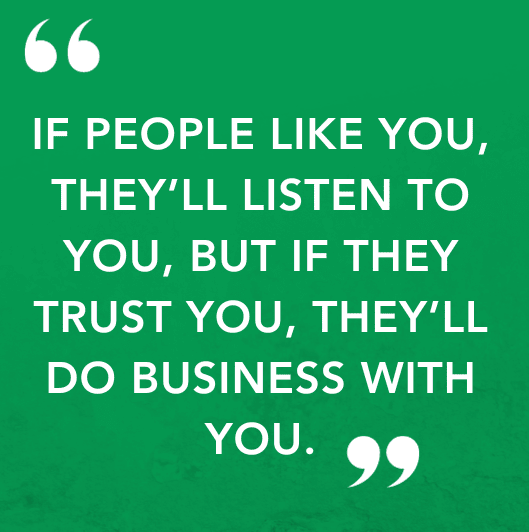
    People buy from people they know and trust.

  • Foundations matter …

    Katharine Hepburn, in her own words:

    “Once, when I was a teenager, my father and I were standing in line to buy tickets for the circus. Finally, there was only one family between us and the ticket counter. That family made a lasting impression on me.

    There were eight children, all under the age of 12. From the way they were dressed, you could tell they didn’t have much money, but their clothes were clean, very clean. The children were well-behaved, standing in pairs behind their parents, holding hands.

    They were so excited about the clowns, the animals, and all the acts they would see that night. From their excitement, you could tell they had never been to a circus before. It was going to be a highlight of their lives.

    The father and mother stood proudly at the front of their little group. The mother was holding her husband’s hand, looking at him as if to say, ‘You’re my knight in shining armor.’ He was smiling, enjoying seeing his family happy.

    The ticket lady asked how many tickets he wanted, and he proudly responded, ‘I want eight children’s tickets and two adult tickets.’ Then she announced the price.

    The wife let go of her husband’s hand, her head dropped, and the man’s lip began to quiver. He leaned in closer and asked, ‘How much did you say?’

    The ticket lady repeated the price.

    He didn’t have enough money. How was he supposed to turn around and tell his eight kids that he couldn’t afford to take them to the circus?

    Seeing what was happening, my dad reached into his pocket, pulled out a $20 bill, and dropped it on the ground. We weren’t rich by any means. My father bent down, picked up the $20 bill, tapped the man on the shoulder, and said, ‘Excuse me, sir, this fell out of your pocket.’

    The man understood what was happening. He wasn’t being handed charity, but he gratefully accepted the help in his desperate, heartbreaking, and embarrassing situation. He looked straight into my father’s eyes, took my dad’s hand in both of his, squeezed the bill tightly, and with trembling lips and a tear streaming down his cheek, he replied, ‘Thank you, sir. This really means so much to me and my family.’

    My father and I went back to our car and drove home. The $20 my dad gave away was what we had planned to use for our own tickets.

    Although we didn’t see the circus that night, we felt a joy inside us that was far greater than seeing the circus.

    That day, I learned the true value of giving. The Giver is greater than the Receiver.

    If you want to be great, greater than life itself, learn to give. Love has nothing to do with what you expect to get, only with what you expect to give—everything.

    The importance of giving and blessing others cannot be overstated because there is always joy in giving.

    Learn to make someone happy through acts of giving.”

    ~Katharine Hepburn

    ‘people buy from people’

  • Stay where you are?

    After a warm, dry spell of weather, today had turned cooler. Sea mist was rolling across the cricket pitch to offer some respite for the fielding side.

    I turned to my friend Bob sitting beside me as he suggested we move to the back of the pavilion where he thought it maybe more comfortable…

    I think I’ll sit right here, came my reply. Besides, I’m into the game and the change in conditions is sure to bring something different.  I’ll stay right where I am, thanks Bob.

    Bob nodded to me as he stood, pulled on his sweater and clamoured over the rows of seats behind us.

    With my fidgeting friend gone, I was able to concentrate on the game before me. The weather and the change of light had brought a different bowler, the field placements were adjusted to reflect the pace and bounce … and then, with the watching spectators (Bob, myself and one or two others) enthralled, something happened.

    The game gathered pace..

    The new bowler wasn’t to the batsman’s liking. Now, as the man with the bat, abandoning his patience, plays an uncharacteristically hurried shot, … he’s caught behind the wicket…

    The action is witnessed from ‘the gallery!’

    ‘Howzat!’ came the reply from Bob, now ensconced at the back of the shed, pint in hand!

    Isn’t it wonderful what change can bring us?

    Mother nature brings us opportunity with a little impatient action taken, both on and off the pitch. Bob has a favourable(?) refreshing new view enjoyed from the gallery and the conversation takes a turn for the better ….

    There’s a quote by Mahatma Gandi:

    ‘You must be the change you wish to see in this world.’

    Isn’t that a great lesson?

  • Gadgets, lions and parachutes

    PEOPLE WALK AWAY from networking groups for all sorts of reasons. They may not find the time to attend regularly, or might not like the structure of the meeting, the food, or, in most cases, it’s because they’re unable to see the opportunity for growth.

    Give your time.

    The business that joins a collective to share conversation participates in ‘networking.’ The clue is in the word itself, connecting with peers over a given time.

    How soon can you be successful? It depends on the type of business you have. For example, you may be offering the latest ‘gadget’, the most popular gadget that has ever appeared on the market! It’s easy to believe you are going to see good results quickly, certainly before the lion tamer or parachute salesman.

    With the hottest of gadgets in your possession you have an established market, people need your gadgets and so customers come to you! They all want the ‘gadget of the day!’ 

    The lion tamer and parachute guy? 

    With such niche products … it’s a no brainer they could be spending quite a bit of time connecting, delivering messages before ever coming close to new business! A lion that needs taming or even a parachute made for you! Perhaps an inventive insurance agent amongst the network may help?

    Then one day! By the magic of word-of-mouth recommendation, an enquiry arrives. Someone needs a lion tamer … together with a bespoke parachute …

    Give networking time and you will be successful.

    Through the strength of its reputation, the niche business can be as successful as the ‘widget of the day,’

    Success is all about developing our fraternity. Consistency sets the successful networker apart from the ‘chancer’ we often see, you know … 

    … those who “go networking” looking for any new business on the day, declaring as they leave that ‘networking doesn’t work,’ We rarely see them again.

    Take time to learn from each other.

    The ancient Greeks taught that all conversations involved three ingredients: 

    Ethos, or the character of the speaker. Pathos, when the speaker and listener connect through empathy, emotion, and Logos.

    The logos discussed by the Greeks refers to the factual content of the message and use of words. The business.

    Be seen, connect with your listener and give your message time.

    To learn what you need, the listener should hear and trust you before they are ready, willing, and able to listen to what you have to say.

    Networking is not right for everyone, although it’s great for every business.

    #niche #usp #networkingworks #gadgets

  • bring the sunshine!

    Living on the North of England coast, I’m heard often complaining the fact that the sun never seems to linger, there’s often a hint ‘she’s’ on her way at times…

    I mean, we have the odd sparkling day and then I’m forced to realise that even the sun needs to take a rest. 

    I know, we appreciate things a lot more in their rarity.

    It’s the same with people don’t you think? Catching up with good friends, spending time with those we haven’t seen for a while, for me, should be a cause for celebration.

    I’m lucky in that I have a rich and varied group of ‘friends’ and acquaintances who meet regularly. We’re sharing precious time as we renew professional (and personal) stories.  Not everyone can talk about their personal challenges, something I feel is a shame. I hear first-hand that not many head home or back to the office and talk up the meeting of earlier that morning.

    By doing just that … our ‘home team’ becomes part of the bigger picture. They learn more about the ‘why. The support network that surrounds the business owner every time he steps up and out to generate interest through engagement. 

    Business becomes even more personal if we share our stories. 

    Recently, I heard from an old friend who informed me of the passing of a mutual colleague. Achen was someone who started his business not so long ago and was part of the original Weekly Business, a time when we were meeting in London. I remember Achen as being a likeable, softly spoken professional. One of those who, when we hear them speaking, we lean in to take a minute and listen. 

    Achen was a family man. I didn’t know until I heard the sad news that he and his wife were parents to three lovely children. I’m sure those kids will remember their father with the fondness I and many others do. 

    I never met Achen’s wife or family, and it’s times like these I wish I had that opportunity.

    I’m reminded of the value of ‘now’ and living in the moment, the importance of listening to the stories of friends through conversation. 

    Many memories have come out of this moment of sad news . Most important though is the recollection of a man who brought help, support, and happiness to many whenever he walked into the room.

    The sun shines longer when we’re spreading the word and talking up prospects.

  • You, me, us.

    I spent my early youth fending for myself. My mother and father split up when I was twelve years old, leaving my mum to bring up four kids. Poor mum, we kids surely test her wits! 

    I say ‘poor mum’ although she never complained and ensured we all had opportunity for learning and fun. If we kids needed something, we asked. 

    If you don’t ask, you don’t get …  

    Since those early days, I’ve always believed that if I was in need, I should go out and find it by asking for help. Rarely do we meet a mind reader who can conjure up our needs without sharing a conversation, do we?

    I do understand that some people find it difficult to ask. I see it first-hand in my role as host of The Weekly Biz. I’m supporting clients through encouragement. 

    Some of my pals are terrified at the very thought of asking for help … apprehensive when seeking that important special something that would further their business and therefore the well-being.

    Perhaps the bigger ask is scarier than the small favour?

    Back in the day … asking for help was seen by many as rude, it was impolite to ask a favour or burden someone with our needs.

    Times have changed.

    You cannot buy referrals at the local store. Some try bribery while there are those who promise all sorts of business favours in return for introductions “… if you help me, I’ll … etc, etc. ” It’s no wonder that for years, networking picked up bad press. 

    You know, it’s all in the way we do it!

    I’m glad to say things have improved big time. These days most new entrepreneurs understand that it’s good to share face to face. It’s a human thingy to talk with another, sharing emotion, knowledge, it’s empowering. It’s great for the self confidence as well.

    Through familiarity, we relax, life is easier, we’re empowered to be specific, giving colleagues the opportunity to help when they smile, asking ‘How can I help?’

    We need to empower our mates!

    Many people spend their time networking by describing what they do. The same introduction every time we meet up, it’s ‘I’m busy just now with this and that, keeping customers happy with stuff … when more importantly, we should be introducing that most important denominator – you/me/ourselves.

    Everyone is busy talking busy, so let’s talk about us.

    By sharing with our friends, introducing our personal story we’re cultivating important relationships.

    Trust is developed as we all understand that people buy from people.

    Ask your friends …

  • Now is the time …

    It’s official, the end of Spring is imminent here in the UK.

    Where did that go?

    In turn, I’m now wondering how I haven’t managed to plant next season’s veg? The spuds, carrots, and greens I promised last year aren’t in the ground yet. I now beginning to feel a little left behind … although it’s not too late!

    I need to prepare now.

    Preparation for the future can be managed if we are mindful. By living in the moment, we can do a little each day to prepare for the future, whether for the business, our health and of course the garden.  The seed is you.

    In conversation with Liz last week she was saying how guilty she felt when taking time away from the business day-to-day to look after the family.  We agreed that passion plays a big part in our commitment to the future. Family is always going to be the main priority. Business? For many, business is part of the family. Our work is often a lifestyle we choose to spend the majority of our time on. It can become all-consuming for those passionate about its well-being.

    There’s a balancing act that many of us play. We can share our time.

    We learn the routines of family life and set aside time for certain necessities. 

    Business being seasonal, we look to the busy times when our offer may be in demand. Then, when it’s not so busy, we develop and nurture what we have to make us more competitive, more attractive to the market. We further our reputation.

    The same goes for networking. Those of us who have spent time cultivating relations understand that the meaningful business may take a little time to present itself. As we look to establish our position of authority, we are the go-to person in the room. Trust takes a while to develop before others consider recommending your trade or services.

    Cultivating a network of support means that we offer our time freely. Sharing our skills and experience through story-telling. Those who walk away from the network after only a few short weeks are not cultivating, they’re hunting for the opportunity. Once they’ve succeeded in gaining an order or two, we rarely see them again, they’re off hunting elsewhere.

    Therefore, to garner any kind of success, think gardening.

    If we tend our patch, prepare the soil, plant the seeds and feed the bed regularly, we may end up with a healthy return on our efforts.

    That’s how we become a reliable business connection. Prepare now, understanding that business is seasonal.

  • Too busy for biz …

    It was set up to be a vibrant morning for breakfast networking. The sun was shining, our venue was organised and ready for a good number of guests, when to my great surprise, Mike had arrived to join the throng.

    We hadn’t seen Mike for a while, it must have been six weeks.

    ‘How are you doing Mike? Long time no see.’

    ‘Hi Charlie, yes I’m well, a little too busy that’s all. How about you?’

    ‘I’m all the better for seeing you Mike, have you been fielding my invitations to the networking, I did follow up via SMS as well?’

    ‘Yeah sorry, mate, I’ve had to take a back seat as we’ve a particularly needy client who has demanded all my time …’

    ‘Mike, how important is future business? We meet to nurture those relationships and reliability for the referrals. When someone isn’t communicating, the only message we hear is that they don’t care.

    Not the way to treat future prospects is it… what can we do to help?’

    ‘Yeah, I know Charlie. I’m only here this morning to catch up with one or two … once things settle down I’ll make a return.’

    Thankfully myself and others in the network, finding themselves in a similar situation to Mike understand that increased business is a by-product of networking. We expect to grow through regular contact and developed trust. To ignore your network due to being too busy for further business signals that Mike is a little unprepared for the results networking may bring. 

    Here’s some simple guidelines to ensure your time networking isn’t similarly wasted:

    • Treat people how you would wish to be treated yourself
    • Develop your circle of confidantes
    • Stay in touch
    • Be present for referrals (don’t be too busy for business!)
    • Recommend network colleagues to friends and family
    • Follow up on promises, so ‘cultivating the reliable’

    Mike has always been a popular guy within the group although he hasn’t helped his future business prospects through neglecting the relationships.

    Business is personal. By being reliable you make yourself referable.