CharlieKenny.me

people * stories * engagement

  • The Bad Boy

    (an excerpt from a forthcoming book of the same name by Kevin John Ragnarsson Wilson Lee Clarke)

    Chapter 1

    It was a quiet, cool, and beautifully crisp Irish lakeside morning as I busied myself tending to the deck of a recently moored motor launch, returned early after an overnight fishing expedition. 

    I was happily lost in my thoughts, at peace, once again declaring myself grateful. ‘I’m so lucky being here … there could be worse jobs I thought, and just look at that view.’

    Suddenly, shaken from my daydream by an unfamiliar sound, I stood bolt upright. Again, I heard it once more … was that the crack of a gun shot!?

    Dropping everything, almost without thinking, I leapt from the deck of the launch, in full stride I raced across the 200 yards from the mooring to the door of the cottage. Stumbling into the kitchen, gasping for breath and almost toppling over … there on the floor was Sean. Not moving, lying before me in a pool of blood.

    ‘God no, please no!’  With the bitter stench of cordite lingering in the air I clambered to kneel beside my love. Confused, I was grasping, hands eventually beneath Sean’s head, cradling him as the milky morning sunshine streamed through the kitchen window. 

    Was it dream, a nightmare? ‘Sean … Sean, please wake up!’

    Then, an overwhelming smell of Chloroform is all I remember from that time, darkness took me as I choked on those awful fumes. 

    The next thing I recall is being jostled awake, I didn’t recognise where I was, I appeared to be a cell before I began to remember … 

    ‘Wha? Sean, Who’s here with me?’ I spluttered …

    Then a voice, a friendly though authoritative voice began:

    Good morning young ‘un. You’re feeling a little groggy no doubt? My name is PC Lonigan, I’m with the local constabulary and you are safe here. I’ve brought you tea, so drink that up, you’ll feel better once you do. Call out for me if you want anything, I’m just next door.

    I sat stunned, barely hearing this words. “I-I need to speak to someone – there were gunshots! Sean, he’s been killed … has he been killed?

    Son, we believe terrorists killed your friend, Sean Fitzpatrick. You are a very lucky young man. Being a descendant, a relative of Michael Collins, the killers dare not harm you!”

    My kindly guardian advised me not to say anything more until legal representation arrived later that day. PC Lonigan then informed me the police intended to keep hold of my car, ‘for a bit’ also that the cottage is out of bounds. Then, this unusually kind officer declared the police would provide me with the means to go home once I’d made a statement. This was to ‘ensure my safety,’ he said. I was to leave Ireland and return to Northumberland.

    I was blubbering inconsolably now. In shock and feeling desperate. I had no life, he was dead, Sean was gone … 

    PC Lonigan also made sure I understood there would be no discussions about what happened with anyone outside of my legal counsel and that the authorities would be in contact with me to follow-up, as and when more information was required.

    It wasn’t long before I was required to make a statement. I found myself sat at a small wooden table together with my solicitor and a detective, both of who journeyed from Dublin.

    PC Lonigan was also with us, providing copious tea and cake.

    ‘Now Michael, said the detective. We need you to hear all about you and exactly what you know about what happened at the cottage. In your own words, tell us please, how you came to be associated with Sean Fitzpatrick and your relationship with him.’

    ‘Where do I start?’ I replied.

    Start from the very beginning Michael. Remember, you are not in any trouble, we simply need to understand your story …

    © 2023 Kevin John Ragnarsson Wilson Lee Clarke

  • No, I’m not telling …

    I’m not going to tell you how to run your business. I’m going to try and help you realise your goals and make business more enjoyable.

    Here are four questions to ask yourself that may help you:

    Do I have direction?

    Who (or what) is your audience …

    Is the business visible (bizable?)

    Am I fit for business?

    There are plenty of questions to ask ourselves when qualifying why we’re in business.

    I like to keep the above points top of mind. These offer the most impactful insight to the business journey. There’s less ‘fluff.’

    Let’s look at those:

    Write each question down as we go …

    Do I have direction? Where is your business is heading – the goal, do you know where nirvana is for your enterprise? If not, spend a little time (a couple of minutes) each day and visualise the end game.

    Who (or what) is your audience? The strategy. Your customers have a huge impact on the end game. I know it’s difficult not to accept every offer of new business along the way. I’ve been there. Let’s keep in mind that if we spend too much time heading in the wrong direction … we may take a little longer to get back on track. Find direction and reach that goal. Think specific audience, think strategy.

    Am I fit for business? Today we have plenty of opportunity to show our logo … splash our message and shout the plaudits from our satisfied customers. Digital is excellent for that hit of dopamine, the instant gratification. Let’s remember that much of our marketing can be time wasted. Until we realise that business is personal. Most of today’s purchasing is through reputable brands, reputable people. Make the personal appearances often. Network, in person. Show potential customers that you are available for new business. Build your brand, become bizable.

    By sticking with the above points, I’ve found my personal journey has not only fulfilled my wishes … it has been more enjoyable.

    Consider the above vision and develop your reputation along the way.

    ‘People buy from people.’

  • Time for passion

    A friend had been having trouble negotiating a demanding work-life balance.

    A passion for the side-hustle seemed to be getting in the way of prioritisation. Cathy was so busy with the day job when she realised she was unhappy. What she wanted most was a business that reflected her passion.

    … You’re in the wrong job. I suggested. Shouldn’t you be prioritising your passion, I asked?

    Duuh … OK smart pants, how do I do that? The day job pays the bills Charlie. How do I walk away and start afresh when I’m reliant on the business that no longer excites me?

    First thing is a conversation. Find someone you trust who stands away from you business. Ask them to observe your business processes, you may find you can create more time.

    Time?

    Time. Unless you’d prefer to cut ties with the business you’ve worked so hard to establish? Wouldn’t that be a shame?

    We all need to make space during the busy lifestyle, by managing our time a little better we create space – and with the extra space, what would you do? What could you achieve?

    I need days more that minutes, Charlie.

    So, think of how much time you may find each day, over six days per week to be able to address your passion. It’s a lifestyle you’ve chosen, now adapt … 

    I didn’t know it would grow so fast, Charlie.

    So people like you and your product. That’s great, isn’t it? How would an extra day per week help you pursue that passion?  It is possible, by stepping back. Understand that we all need to trust others once in a while to help us work smarter. Be better.

    OK, an extra day would be useful …

    With that extra time, the bonus is that you would be able to visualise. See now that you’re on the road to creating a business that works without you.

    You mean it’s the start?

    It’s where we should start, with the end in mind, yet it can be difficult to start up with this ability … the ‘bizability.’ By sharing with others and trusting in their skills we gift ourselves time. Have you thought about an extra pair of hands-on for one/two days per week?

    I’m not ready Charlie.

    Try creating that time … you’ll soon be ready …

    Through rapport, we’re blessed with time and space. We create a transportable (marketable, saleable) business, allowing us to plan for the future. With the passion in mind.

  • Learn and move on

    As business owners we understand that tough times can beset the best intentions. We’ve all been there, haven’t we? We’re trying to stick to the plan, the strategy is in place and suddenly … it all goes pear-shaped. Why? It may be because of market conditions, budget cuts, a rise in operating costs, mortgage rates, or a host of accompanying ‘downers’ when we find we’re simply stuck and ‘sinking’ fast. 

    The results can be disheartening. We find ourselves on the negative side of the fence and it’s tricky picking up the pieces through all the ‘stuff’ and it becomes almost impossible to even consider jumping the fence to reshape the plan. Stuck fast. The distractions are not only disheartening but debilitating. It’s a scene where, if action isn’t quickly taken, can be played out daily.

    The worst of it? The more bad news hangs around, more of the same turns up!

    Ultimately we find ourselves inhabiting the negative mindset. It’s tough enough dealing with your own knocks and setbacks but contending with the ‘sympathisers’ only interested in hearing bad news doesn’t help. Remember, bad news attracts more post views, sees most clicks, right? Why? Because it’s more compelling.

    Doom attracts the doom-mongers!

    So how do we combat the constant flow of knocks and downbeat attitudes that seem to feed the negative mind set, the pessimism? 

    To remedy any of the above symptoms of negative is surprisingly simple. Negative cannot live with positive. There is always an opposite to every reaction and in my experience a solution is always found by reaching out through candid discussion.

    Be bold, step out and find the ‘right kind’ of people, those you trust and who thrive on success, sharing positive news. Being transparent with colleagues who visualise the path forward will help talk up the steps to success.

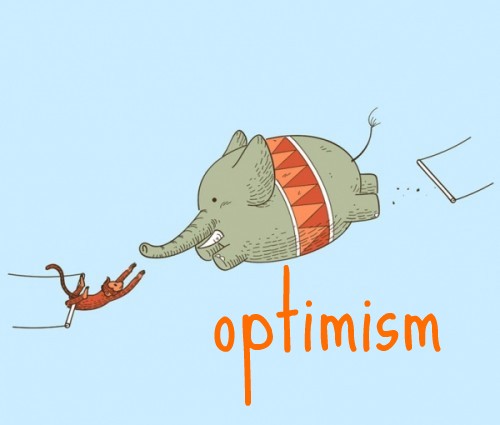
    I’m lucky, the business I’m in attracts the optimism required to be successful during challenging times. 

    My advice if you’re stuck with how to move forward? Find yourself a network of like-minded associates and share whatever the seasonal disappointments have brought you. Ask for help. Chances are there is already a solution to your current situation just waiting for the conversation. Take time to talk up your past wins and of course recall the shortcomings. Learn how to thrive again. 

    Discuss, learn and discard to realign as your business, your life benefit through association with the positive.

    Positive attracts optimism. Leave the alternative to the sceptics.  

  • May Sarton on the Art of Living Alone

    “There is no place more intimate than the spirit alone,” the young May Sarton (May 3, 1912–July 16, 1995) wrote in her stunning ode to solitude — the solitude she came to know, over the course of her long and prolific life, as the seedbed of creativity

    Living alone can be deeply rewarding and deeply challenging. It is not for everyone. It is not for those who romanticize its offerings of freedom and focus, but excise its menacing visitations of loneliness and alienation. It is not for those who find silence shattering. It is especially not for those who hunger for another consciousness to validate their experience and redeem their reality. It is only for the whole.

    In her elder years, living alone on the coast of Maine and savoring a renaissance of creative energy after a long depression, Sarton returns to the subject of what solitude is and is not on the pages of her boundlessly rewarding journal The House by the Sea (public library)

    May Sarton

    Looking back on her life, she writes:

    Solitude, like a long love, deepens with time.

    But what solitude brings to a person is shaped by what the person brings to solitude. One August day, life brings Sarton a prompt to consider the art of living alone and the necessary preconditions for making of solitude not a resignation but a rapture:

    Yesterday I had a letter from a young woman who is living alone, a film maker of some reputation. She wants to do a film on people who live alone, and will come next week to talk about her plans. I gather she has some doubts about the solitary life. I told her that I feel it is not for the young (she is only thirty-three). I did not begin to live alone till I was forty-five, and had “lived” in the sense of passionate friendships and love affairs very richly for twenty-five years. I had a huge amount of life to think about and to digest, and, above all, I was a person by then and knew what I wanted of my life. The people we love are built into us. Every day I am suddenly aware of something someone taught me long ago — or just yesterday — of some certainty and self-awareness that grew out of conflict with someone I loved enough to try to encompass, however painful that effort may have been.

    Complement with the Buddhist scholar and teacher Stephen Batchelor on the art of solitude, Emerson on what solitude really means, and a contemporary field guide to how to be alone, then revisit Sarton on gardening and creativityhow to cultivate your talenthow to live openheartedly in a harsh world, and her stunning poem about the relationship between presence, solitude, and love.

    With thanks to The Marginalian by Maria Popova.

  • Just slow it down …

    I’ve been asked many times whether it was possible to ‘accelerate the magic’ that determines success when networking.

    Success, in this case, meaning more business.

    ‘Accelerating the magic?’ It’s not an easy question to answer given ‘people buy from people,’ You see, we’re all very different individuals with various reasons for stepping out of the comfort zone for networking. Expectation varies greatly.

    I’ve seen colleagues leave the meeting surprised that they haven’t generated any enquiries … thinking no-one was interested.  Let’s face it, not everyone is in the market for your product or services all of the time.

    My answer to the above mentioned query … ‘accelerating the magic’ is, on most occasions, the same.

    To be more approachable to others, make yourself available. Work on the ‘familiar’ to become referrable.

    Any networking event usually takes the form of a structured, scheduled agenda running for a specific time. So, my point being, rarely is any important buying decision made on a chance meeting … at a business breakfast or dinner! 

    What’s to keep you from arriving half an hour early and staying an extra half an hour after the event?

    Time! I hear you say.

    Give more time. Freely. After all, business is personal for many. Schedule an appointment before the meeting – or after proceedings. Set up the date! Some I know attending events even ask for the attendee list from the organiser.

    Spend more of your valuable time by being available for conversation before and after the meeting. By slowing the process down, you have a much better chance of accelerating the realisation of positive results from your networking.

    PS.  If you would like to ‘accelerate the magic’ via ZOOM (it’s free) please reply to this note and request a link. I’d be happy, if I can, to help through conversation. 

  • Am I worthy?

    Hey Charlie, ‘what’s in it for you?’

    Once more I was asked why I manage to operate a not-for-profit social enterprise and not get paid for it. What did I … get out of it?

    My answer is the same every time. I’m networking for the same reason as anyone else – to consolidate my business interests through reputation management.

    I usually go on to explain … because, I can’t help myself …

    During the early part of my career, I was always on the lookout for new business. My networking complimented my canvassing, marketing, and appointment-making. I would go to great lengths to make sure my company was visible. Yes, I even advertised! I was a hungry guy twenty years ago, I loved my business (still do) and I was in a hurry for my new business to sustain my lifestyle.

    The great dilemma. Does my business serve a particular marketplace? Is it ready for me? Am I worthy?

    I ask myself this same question most days.

    As I became more established, once the business was known, ‘bizable’ I began to care about how others were contending with their passion to do well, to make ends meet. I could relate to the tough stuff.

    We can be our own worst-best friends. The old catchphrase “Trust in yourself and your abilities, your choices, products, and services,” comes to mind. We are tested when in reality, during tough times, (yes, it can be tough) … we should remember to take a breath, step back and realise that as we flex our business muscle, we’re growing, galvanising our emotional capital each time we’re challenged or begin to question ourselves.

    So by ‘hanging in there’ and continuing to extol the virtues of our offer, over time others in our network are witnessing our progress. The empathy develops and with familiarity and longevity, our reputation is enhanced.

    My social enterprise, the not-for-profit network I provide on my side of town has introduced me to hundreds of people over the years. Many of these being start-ups (or solopreneurs), much the same as I was at some point. I’ve been lucky enough to witness many transformations from star-up to entrepreneur and with that I am introduced to new connections, new passion, each with their own story and plans for success.

    I’m lucky.

    By showing consistency and resilience, being ready to share my experiences and seek out advice, by helping others I now find I no longer need to be in such a hurry to find new business. New business comes to me, through referral.

    People buy from people.

  • Loving the world more.

    Here’s a great observation from our friends at:

    The Marginalian by Maria Popova

    “In a world full of people who seem to know everything, passionately, based on little (often slanted) information, where certainty is often mistaken for power, what a relief it is to be in the company of someone confident enough to stay unsure (that is, perpetually curious).”

    How to Love the World More: George Saunders on the Courage of Uncertainty

    Nothing, not one thing, hurts us more — or causes us to hurt others more — than our certainties. The stories we tell ourselves about the world and the foregone conclusions with which we cork the fount of possibility are the supreme downfall of our consciousness. They are also the inevitable cost of survival, of navigating a vast and complex reality most of which remains forever beyond our control and comprehension. And yet in our effort to parse the world, we sever ourselves from the full range of its beauty, tensing against the tenderness of life.

    How to love the world more by negotiating our hunger for certainty and our gift for story is what George Saunders explores in some lovely passages from A Swim in a Pond in the Rain: In Which Four Russians Give a Master Class on Writing, Reading, and Life (public library) — the boundlessly wonderful and layered book in which he reckoned with the key to great storytelling and the way to unbreak our hearts.

    Art by Jean-Pierre Weill from The Well of Being

    In consonance with neurologist Oliver Sacks’s insight into narrative as the pillar of personal identity, Saunders examines the elemental impulse for storytelling as the basic organizing principle by which we govern our lives:

    The instant we wake the story begins: “Here I am. In my bed. Hard worker, good dad, decent husband, a guy who always tries his best. Jeez, my back hurts. Probably from the stupid gym.”

    And just like that, with our thoughts, the world gets made.

    Or, anyway, a world gets made.

    This world-making via thinking is natural, sane, Darwinian: we do it to survive. Is there harm in it? Well, yes, because we think in the same way that we hear or see: within a narrow, survival-enhancing range. We don’t see or hear all that might be seen or heard but only that which is helpful for us to see and hear. Our thoughts are similarly restricted and have a similarly narrow purpose: to help the thinker thrive.

    All of this limited thinking has an unfortunate by-product: ego. Who is trying to survive? “I” am. The mind takes a vast unitary wholeness (the universe), selects one tiny segment of it (me), and starts narrating from that point of view. Just like that, that entity (George!) becomes real, and he is (surprise, surprise) located at the exact center of the universe, and everything is happening in his movie, so to speak; it is all, somehow, both for and about him. In this way, moral judgment arises: what is good for George is… good. What is bad for him is bad. (The bear is neither good nor bad until, looking hungry, it starts walking toward George.)

    So, in every instant, a delusional gulf gets created between things as we think they are and things as they actually are. Off we go, mistaking the world we’ve made with our thoughts for the real world. Evil and dysfunction (or at least obnoxiousness) occur in proportion to how solidly a person believes that his projections are correct and energetically acts upon them.

    Art by Kay Nielsen from East of the Sun and West of the Moon. (Available as a print and as stationery cards.)

    Over time, our stories harden into certainties that collide with each other every time we engage with another person, who is another story — another embodiment of the unreliable first-person narration known as skaz that permeates classic Russian literature. With an eye to the inescapable fact that “there is no world save the one we make with our minds, and the mind’s predisposition determines the type of world we see,” Saunders contours the commonplace tragicomedy of colliding in the mind-made world of skaz:

    I think, therefore I am wrong, after which I speak, and my wrongness falls on someone also thinking wrongly, and then there are two of us thinking wrongly, and, being human, we can’t bear to think without taking action, which, having been taken, makes things worse.

    […]

    The entire drama of life on earth is: Skaz-Headed Person #1 steps outside, where he encounters Skaz-Headed Person #2. Both, seeing themselves as the center of the universe, thinking highly of themselves, immediately slightly misunderstand everything.

    Trying to communicate across this fissure of understanding yields results sometimes comical and sometimes tragic, always affirming that reality is not singular but plural, not a point of view but a plane of possible vantages. With an eye to Chekhov — who was a physician by training and an excellent one, but an even better writer because a diagnosis is a forced conclusion of curiosity but art is the eternal sandbox of doubt — Saunders writes:

    In a world full of people who seem to know everything, passionately, based on little (often slanted) information, where certainty is often mistaken for power, what a relief it is to be in the company of someone confident enough to stay unsure (that is, perpetually curious).

    One of Antoine de Saint-Exupéry’s original watercolors for The Little Prince.

    After a close reading of Chekhov’s short story “Gooseberries,” he reflects:

    It’s hard to be alive. The anxiety of living makes us want to judge, be sure, have a stance, definitively decide. Having a fixed, rigid system of belief can be a great relief.

    […]

    As long as we don’t decide, we allow further information to keep coming in. Reading a story like “Gooseberries” might be seen as a way of practicing this. It reminds us that any question in the form “Is X right or wrong?” could benefit from another round of clarifying questions. Question: “Is X good or bad?” Story: “For whom? On what day, under what conditions? Might there be some unintended consequences associated with X? Some good hidden in the bad that is X? Some bad hidden in the good that is X? Tell me more.”

    Art by Paloma Valdivia from Pablo Neruda’s Book of Questions

    This openness to more — to truth beyond story, to beauty beyond certainty — is precisely what teaches us how to love the world more. With a deep bow to Chekhov as the master of this existential art, Saunders writes:

    This feeling of fondness for the world takes the form, in his stories, of a constant state of reexamination. (“Am I sure? Is it really so? Is my preexisting opinion causing me to omit anything?”) He has a gift for reconsideration. Reconsideration is hard; it takes courage. We have to deny ourselves the comfort of always being the same person, one who arrived at an answer some time ago and has never had any reason to doubt it. In other words, we have to stay open (easy to say, in that confident, New Age way, but so hard to actually do, in the face of actual, grinding, terrifying life). As we watch Chekhov continually, ritually doubt all conclusions, we’re comforted. It’s all right to reconsider. It’s noble — holy, even. It can be done. We can do it. We know this because of the example he leaves in his stories, which are, we might say, splendid, brief reconsideration machines.

  • My busy season?

    For the start-up looking to establish itself in a rural community such as ours, business can be tough.

    The ‘busy season’ for most market towns with a short summer is the tourist footfall. Many traders have grown by relying on this, there’s only a short time of bounty for the seasonal business to become established.

    I used to ask myself … ‘What happens for the rest of the year?’ 

    Some start-ups follow the popular trends by spending their time cultivating new opportunities through social media. Hoping for a ‘win’ by eaching out during ‘conversation,’ or by joining popular posts. Many simply display images for the ‘offer of the day,’ a discount here or there during juxtaposition with the ‘traffic.’

    Social media? It’s a lottery for professional business looking to meet their next best customer. Me? I prefer personal engagement. I’m busy all year ’round.

    Sure, we’re all different. I do understand that some are more comfortable with the online business experience. I also understand that those with important plans for the future need the qualification that face to face brings.

    New connections have always been key to my business. This is why networking remains the essential routine for me. It’s my … ‘Support Network.’

    We’re lucky with a coming together of independent business people meeting regularly over breakfast, the conversation often carries a common topic … how can I help you? The new connections offer so much more than business. Because business is yet another by-product of networking.

    The regular meetings bring conversation alongside a whole new confidence in ‘what’s possible.’ The trusted network – or local community helps realise opportunity through broader vision. The familiar face is a ‘sounding board’ for choices, the investment of your time – and referral.

    We welcome all kinds of attendees. From established SME to the seasonal business looking to become that all year-round supportive enterprise. Most importantly we seek ‘people persons.’ The opportunity for the win-win is very real when we converse and it helps(?) we have a 7.30 – 9 am meeting – business before the ‘phones start.

    As a social enterprise there are no fees, apart from your choice of breakfast. No subscription or mandatory individual requirements to think of either. It’s a less complicated way of developing the greater marketplace, a kinder landscape.

    The Weeklybiz structured meetings encourage great prospects over a decent breakfast. For all types of kind people, in business all year round.

  • The magic of lucky

    Charlie, I’m suffering a famous ‘lack of confidence’ vote in myself … I don’t seem to be picking up any business through networking. I’m lucky with the introduction here and there, but … what am I doing wrong?

    Ian, there’s nothing wrong. You are practicing the art of networking. You, like all who practice ‘the magic,’ are sharpening your pencil for when the opportunity arises.

    Practice the magic?

    The feeling of unlucky and unloved? It’s more common than you think. Understand that we enjoy a network community with much to offer. Each attendee is a specialist in their art.

    Now Ian, until you give time to introduce yourself to each (everyone) in your network … through the one to one, you truly understand why it’s called ‘networking.’  It is here, when colleagues see you’ve committed to the long-haul … it is now, you will begin to benefit through networking.

    How long is the long haul, Charlie?

    It’s tough early-on, even more so when we see the immediate results others seem to enjoy. It may be a paradox? We ask ourselves, ‘why don’t I have this instant success?’

    More likely the results you witness early are a misunderstanding. Think, economy to scale.  We sometimes feel under-appreciated – but guess what? It’s all part of the experience. Don’t confuse networking with the quick-fix. Depending on the skills we have, we’re all blessed with the odd referral here and there. 

    Good, meaningful business Ian? It may not be the single photograph of the family I discussed with our photographer recently. The real referral is the opportunity to record an event or special occasion. That single photograph being a great initial introduction of skills leading to referral.

    We all know that it takes time for recommended business to come our way. So, the most effective way of building your reputation …’your lucky?’ 

    Be where your customers are. Have patience and practice your story. Inform your audience of your strengths. Who do you work with? Where do you work from, how far do you travel? Tell your story Ian, in technicolour!

    Your ‘lucky,’ arrives when you find yourself comfortable ‘in the room,’ happy being where your listeners are. Lucky is when your reputation has somehow preceded you. Realising that word-of-mouth has worked her magic.

    Your ‘lucky’ is a result of your presentations Ian. At some point you realise your team have heard your story away from the regular meeting. Your details passed on to the third party.

    ‘So how long does it take, Charlie?’

    OK Ian, reflect on what we’ve talked about. Once that meaningful practice of patience brings the magic, then lucky, let me know. You will have your answer and I can learn some more. 

    People buy from people they know and trust.