CharlieKenny.me

people * stories * engagement

  • Now is the time …

    It’s official, the end of Spring is imminent here in the UK.

    Where did that go?

    In turn, I’m now wondering how I haven’t managed to plant next season’s veg? The spuds, carrots, and greens I promised last year aren’t in the ground yet. I now beginning to feel a little left behind … although it’s not too late!

    I need to prepare now.

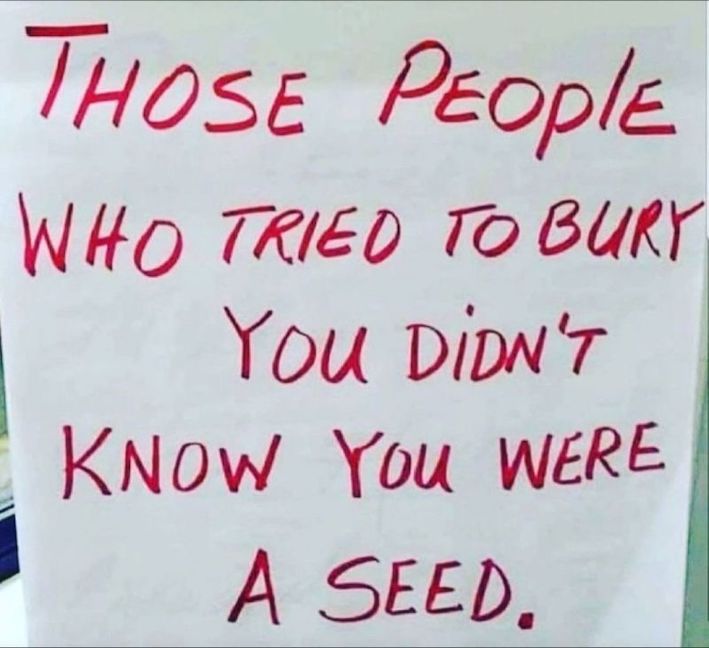
    Preparation for the future can be managed if we are mindful. By living in the moment, we can do a little each day to prepare for the future, whether for the business, our health and of course the garden.  The seed is you.

    In conversation with Liz last week she was saying how guilty she felt when taking time away from the business day-to-day to look after the family.  We agreed that passion plays a big part in our commitment to the future. Family is always going to be the main priority. Business? For many, business is part of the family. Our work is often a lifestyle we choose to spend the majority of our time on. It can become all-consuming for those passionate about its well-being.

    There’s a balancing act that many of us play. We can share our time.

    We learn the routines of family life and set aside time for certain necessities. 

    Business being seasonal, we look to the busy times when our offer may be in demand. Then, when it’s not so busy, we develop and nurture what we have to make us more competitive, more attractive to the market. We further our reputation.

    The same goes for networking. Those of us who have spent time cultivating relations understand that the meaningful business may take a little time to present itself. As we look to establish our position of authority, we are the go-to person in the room. Trust takes a while to develop before others consider recommending your trade or services.

    Cultivating a network of support means that we offer our time freely. Sharing our skills and experience through story-telling. Those who walk away from the network after only a few short weeks are not cultivating, they’re hunting for the opportunity. Once they’ve succeeded in gaining an order or two, we rarely see them again, they’re off hunting elsewhere.

    Therefore, to garner any kind of success, think gardening.

    If we tend our patch, prepare the soil, plant the seeds and feed the bed regularly, we may end up with a healthy return on our efforts.

    That’s how we become a reliable business connection. Prepare now, understanding that business is seasonal.

  • Too busy for biz …

    It was set up to be a vibrant morning for breakfast networking. The sun was shining, our venue was organised and ready for a good number of guests, when to my great surprise, Mike had arrived to join the throng.

    We hadn’t seen Mike for a while, it must have been six weeks.

    ‘How are you doing Mike? Long time no see.’

    ‘Hi Charlie, yes I’m well, a little too busy that’s all. How about you?’

    ‘I’m all the better for seeing you Mike, have you been fielding my invitations to the networking, I did follow up via SMS as well?’

    ‘Yeah sorry, mate, I’ve had to take a back seat as we’ve a particularly needy client who has demanded all my time …’

    ‘Mike, how important is future business? We meet to nurture those relationships and reliability for the referrals. When someone isn’t communicating, the only message we hear is that they don’t care.

    Not the way to treat future prospects is it… what can we do to help?’

    ‘Yeah, I know Charlie. I’m only here this morning to catch up with one or two … once things settle down I’ll make a return.’

    Thankfully myself and others in the network, finding themselves in a similar situation to Mike understand that increased business is a by-product of networking. We expect to grow through regular contact and developed trust. To ignore your network due to being too busy for further business signals that Mike is a little unprepared for the results networking may bring. 

    Here’s some simple guidelines to ensure your time networking isn’t similarly wasted:

    • Treat people how you would wish to be treated yourself
    • Develop your circle of confidantes
    • Stay in touch
    • Be present for referrals (don’t be too busy for business!)
    • Recommend network colleagues to friends and family
    • Follow up on promises, so ‘cultivating the reliable’

    Mike has always been a popular guy within the group although he hasn’t helped his future business prospects through neglecting the relationships.

    Business is personal. By being reliable you make yourself referable.

  • Innovation, endurance

    A few of us met up for coffee after our networking event where I asked Norman what was the main part of his business. He has many interests, from electric bicycles to promotional items to his own range of board games. What keeps your business ticking over Norman?

    ‘It’s difficult to say, you know. If I’m lucky with an order for a state-of-the-art electric bike, this can float the business for a few months. More so my passion is the pin badges and magnets I produce for customers.’

    ‘It’s the variety, that’s what gives me enjoyment. We should enjoy what we do, don’t you think?’

    I agree, I started. It’s not a passion if you aren’t getting any enjoyment. It sounds like your ‘endurance items’ provide you with the passion so lacking in many workplaces today?

    ‘Endurance items?’ asked Norman.

    Yes, those promotional badges were once referred to as ‘endurance items’ way back in the ’90s.

    Norman was on the case – not wishing to miss an opportunity he consulted his mobile and searched online ‘endurance items.’

    Nothing.  ‘Sports supplements’ and other things Charlie – there’s nothing about badges?

    Norman and I discussed that ‘back in the day’ the ambitious sales-person would always welcome the opportunity to offer promotional hand-outs. Trade shows were a great place to collect a handful of freebies. We called these endurance sales items in the trade.  Nowadays these are referred to as simply giveaways, appreciation tokens or swag.  

    Norman’s promotional badges would have been called similar. Another sales endurance item.

    Success in business is about talking the language don’t you think?  This skill comes with time and hearing enough messages to learn what to listen out for. Networking is great for that.

    Today’s conversation was a reminder from Norman’s ingenious offer that we can never stand still in business. With so many challenges as we endeavour to make a living, the savvy business owner, whether sole trader/entrepreneur or thriving SME need to be thinking innovation.

    What’s our difference? How do we attract more interest in the skills we are providing?

    Success has always been about who we know.

    While technology today has stolen a lead on many of the traditional forms of business offerings … it may have even sounded the death knell to many of those lacking the vision to move on … it’s comforting to know there may still be room for innovative people to step up and move forward.

    Today I’ll thank networking, that opportunity that never goes away. Plus of course Norman for putting me back on the ‘straight and narrow!’

  • Speaking the lingo

    Janice and I were waiting for a train, talking progress over pots of tea the other day.

    I’d managed to load BAD BOY, a book by Kevin Clarke to a new publishing platform while my friend Janice was considering promoting her new business. She was looking to do some advertising.

    Janice has been in business only twelve months and she was eager to gain more orders for her design services.

    ‘Have you considered ‘word of mouth’ Janice, working alongside a mentor?’

    ‘Er, no Charlie. I’m not ready for that step yet. I’m confident I can ‘get there’ on my own … What does a mentor do anyway?’

    I explained to Janice my own thoughts on networking, collaboration, and the whole ‘people buy from people’ principle. It works by learning from those within our circle, those who may be ahead of our own business curve through experience, learning as they go. 

    I saw the look of enlightenment cross her face as Janice asked …

    ‘Where do you meet Charlie?’

    As it happens, Janice is at the other end of the country, so unable to meet at our in-person meetings. I did ask her along another time, when I’d introduce her via the regular Zoom call …

    I felt the reality check with Janice very satisfying for me. On reflection, our conversation made me realise I’d learned something from someone 40 years my junior. 

    Over the rim of the tea cup I saw that being in business for over 25 years, I so often overlooked the opportunity …

    … those regular scheduled meetings with others who have similar experience to mine is invaluable. The conversation flows as we share so much, we talk the same language through experience.

    Apart from the conversation, we learn that we’re never alone in our business pursuits. The reality-check is that we’re never too young (or too old) to learn new things by engaging in conversation with colleagues.

    Networking isn’t always about the next order, that’s yet another by-product of networking.  

  • My shout.

    I’m going to the pub, Charlie.

    A friend of mine is struggling to come to terms with ‘starting again.’  These past few months Nancy has felt her business not ‘going anywhere.’ Now she feels the need for reinvention, by trying something new.

    Is that so strange? I hear you say …

    After all, as self-employed entrepreneurs, we have the ability to pivot. There’s no contending with a ‘corporate’ depth of structure. We’re flexible, and for many, we’re able to ‘scale to fit,’ so adapt to the journey.

    I’m going to try my hand at being a publican, Charlie. What do you think? Said Nancy.

    I did detect a smile. Now, given Nancy had been in the care industry these past several years, you’d be forgiven to think that support of a different kind would be … well, second nature, wouldn’t you?

    Nancy, I asked. How long have you been in business?  

    Two years, Charlie.

    You do understand the good things take time don’t you … why not stick to what you do best?

    You mean two years of perseverance isn’t enough?

    I mean the time it takes to establish who you are, what you do and how you offer solutions to particular problems. Those two years you’ve spent developing relationships …

    Yes, I’ve met some great people. It’s just that I can’t see any meaningful business coming my way, Charlie.

    Here’s what I mean, Nancy …

    The two years you’ve’ invested’ in your new venture. Think of the word ‘invested’ Nancy …

    The time we spend engaging and telling the story pays off only when we maintain consistency. The investment in people and the potential in the connection is often missed when we start up Nancy. You know it’s about who your contacts may know, not what they, themselves, are buying, don’t you?

    Yeah, I see that, Charlie. It’s the results just seem like such a long time coming along.

    be bold, share the story

    Nancy, word of mouth favours the bold.

    You and your prospects are considering investing in each other every time you meet. The reality is there are many influences we should consider when looking for success. 

    Is what you offer needed? Is it urgent? Is now the right time?  Do you have what they need and … are you able to do the job? Depending on who you talk to, success does take time.

    OK, I get it Charlie, it’s about connections.  What do we do now?

    Well, why not let’s take a look at that pub you were fond of joining and see who we meet today?

    Your shout?

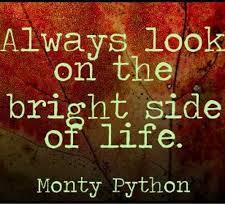
  • Look on the bright side

    No, this story isn’t about the film ‘Life Of Brian.’

    Here’s a reflection from a friend of mine I’d like to share with you … nothing to do with the movie mentioned above although there are certain similarities.

    My story reflects on Brian Lever, a professional chauffeur. He and I were talking the other day as he waited for his next fare. Brian is in the people business and we shared a lot in common as we discussed all things topical. 

    Brian lost his job two years ago after 30 years as an Account Manager with a household name. 

    ‘The company were looking at saving costs, and as you and I know Charlie, staffing is a huge overhead to any business. Anyway, I’d spent my working life supporting corporate clients, large and small. I was responsible for 350 customers. In their wisdom, the Company informed me and hundreds of others that we’d lost our jobs. We were making way for ‘a new incentive.’  

    In their wisdom, the Company was to outsource my sales responsibilities. ‘Cost saving’ included bringing in teams of telephony staff to carry on the work of people like me.’

    I sympathised with Brian, I could see he was deeply aggrieved to have been ‘let go’ after such a long time in service.

    We continued talking …

    ‘You know what though, Charlie?  The company plan didn’t work.  There was a u-turn and last month myself and a handful of my former colleagues were offered our jobs back. The same roles, more autonomy, and generous incentives.  It appeared the ‘new teams’ were lacking in something important …’

    It seems the faceless voices on the telephone couldn’t duplicate the in-person experience. The affinity or emotional connection one person has with another.

    The Company had realised the true value of trusted, knowledgeable staff. In the eyes of the customer, the person IS the company. The trusted relationships cultivated over many years are the CORNERSTONE for ongoing business.

    Our Brian story is not so much the ‘Life Of Brian’ satire. It’s more like a tragicomedy seen all too often in today’s business world as tech tries, unsuccessfully, to replace human interaction.

    People buy from people, because business is personal. 

  • Happiness 365!

  • A Ghost In The Garden

    By Maria Popova

    One of the things no one tells us as we grow up is that we will be living in a world rife with ghosts — all of our disappointed hopes and our outgrown dreams, all the abandoned novels and unproven theorems, all the people we used to love, all the people we used to be. A ghost is a palpable presence of an absence charged with feeling, the contour of something half-known, half-remembered, half-forgotten — a halfway house between what we understand and what we cannot, between what we have let go and what we cannot. 

    Children are especially prone to perceiving ghosts because childhood itself is such a halfway house between imagination and reality, because what they know is so small against the vastness of what there is yet to know and what may never be known that they invent their own answers to the immense open question of life, answers wild and wondrous and often true. 

    Writer Kyo Maclear and artist Katty Maurey conjure up this primal reckoning with the unknowns of love and loss in There’s a Ghost in the Garden (public library) — the subtle and soulful story of a little boy who believes a ghost haunts his grandfather’s garden. 

    In the course of trying to discern the source and nature of the ghostly presence — a ghost mischievous but friendly, knocking down flower pots, leaving “little presents” in the bird nest and tracks on the path that “was once a cool, dark stream” — the boy discovers that his grandfather also had a childhood, that inside the old man lives the ghost of a long-ago boy who also had fantasies and fears, who also used to play in the flickering sunlight, who once swam in the stream that is now a dry path. 

    As the two converse, shadows flit across the gloaming garden — a hare, a fox, a deer, a bird — never fully revealing themselves, there and then gone, as the stars, clear and constant, rise in the night. 

    There is no grandmother in the picture — only a young boy and an old man talking about ghosts, about what is remembered, about the seen and the unseen.

    What emerges from the story is the intimation that forgetting — those who have left us, and the parts of ourselves we have left behind — is a kind of death, but we can come back from it through memory and love, which twine the lifeline tethering us to everything that is beautiful and enduring.

    Complement There’s a Ghost in the Garden with a different lens on the garden and the spirit and a different lens on the living ghost in each of us — the mystery of what makes you and your childhood self the same person, despite a lifetime of physical and psychological change.

    Thank you Maria.

  • Know what you want?

    I was twelve years of age when I realised I needed to work for a living. How about you?

    It was the time I’d started secondary school. All my friends were riding cycles to and from school and so, naturally, I thought life would be so much better if I was able to ride instead of walk the 2/3 miles to be with friends.

    So, I did what most kids my age did – I asked my dad if he would buy me a bike. 

    ‘Perhaps wait until Christmas,’ came the response from dad. ‘Besides, if I go out and find a bike for you, then your brother will need one as well.’

    ‘But dad, he doesn’t start ‘big school’ until next year …’

    ‘I tell you what, Charlie …’ Dad began…

    ‘I’ll buy you half a bike if you can raise the money for the other half. If you can do this, you shall have what you want.’

    Of course, I hadn’t  a clue where to start, although it didn’t take me long to realise I’d need more money than I had in my possession, to purchase ‘half a bike.’

    That said, I knew better than to argue with my father … I’d try Mum instead.

    ‘Charlie, if it’s important you need to try and find a job after school, or at the weekend?’ Came a sensible reply.

    So, I busied myself knocking on doors offering my services for odd jobs. Before long, I found that by running errands, collecting rubbish and helping out around the house … with a garden tidy, or washing the neighbour’s car, the collective small sums soon set me on the path to ‘entrepreneurship.’

    The next endeavour was the summer lemonade at the end of the driveway, I even had a ‘trusty’ helper in my brother who soon learned the value of partnership. We then progressed to delivering leaflets … then, by the Autumn I was offered a ‘paper round,’ if I had a bike!

    Now, I hadn’t all of the money that paid for a bicycle, although one morning, to my amazement, there on the porch was the bike I’d been working for.

    ‘That’s reward for all your effort, Charlie. Said Dad.  By making yourself available for work and becoming reliable, you’ve put yourself in a position for further opportunity. Good for you! Now work on that paper-round so we might save something saved for your brother’s bike, eh?

    These days I don’t have a ‘paper-round’ although I do sometimes yearn for those simpler times.  Today I am always ready to tell (a condensed version) of the above story if anyone ever queries when they are likely to see a return on their efforts while business networking … 

    Networking meets you halfway.

    Such as life, we see a return on what we put in, right?

  • This is the elemental speaking: It is during phase transition — when the temperature and pressure of a system go beyond what the system can withstand and matter changes from one state to another — that the system is most pliant, most possible. This chaos of particles that liquefies solids and vaporizes liquids is just the creative force by which the new order of a more stable structure finds itself. The world would not exist without these discomposing transitions, during which everything seems to be falling apart and entropy seems to have the last word. And yet here it is, solid beneath our living feet — feet that carry value systems, systems of sanity, just as vulnerable to the upheavals of phase transition yet just as resilient, saved too by the irrepressible creative force that makes order, makes beauty, makes a new and stronger structure of possibility out of the chaos of such times.

    Light distribution on soap bubble from the 19th-century French physics textbook Le monde physique. (Available as a print and as stationery cards.)

    Cultures and civilizations tend to overestimate the stability of their states, only to find themselves regularly discomposed by internal pressures and tensions too great for the system to hold. And yet always in them there are those who harness from the chaos the creative force to imagine, and in the act of imagining to effect, a phase transition to a different state.

    We call those people artists — they who never forget it is only what we can imagine that limits or liberates what is possible. “A society must assume that it is stable,” James Baldwin wrote in reckoning with the immense creative process that is humanity, “but the artist must know, and he must let us know, that there is nothing stable under heaven.” In the instability, the possibility; in the chaos, the building blocks of a stronger structure.

    A century of upheavals ago, suspended between two World Wars, Hermann Hesse (July 2, 1877–August 9, 1962) considered the strange power and possibility of such societal phase transitions in his novel Steppenwolf (public library). He writes:

    Every age, every culture, every custom and tradition has its own character, its own weakness and its own strength, its beauties and ugliness; accepts certain sufferings as matters of course, puts up patiently with certain evils. Human life is reduced to real suffering, to hell, only when two ages, two cultures and religions overlap. A man of the Classical Age who had to live in medieval times would suffocate miserably just as a savage does in the midst of our civilisation. Now there are times when a whole generation is caught in this way between two ages, two modes of life, with the consequence that it loses all power to understand itself and has no standard, no security, no simple acquiescence.

    We too are living now through such a world, caught again between two ages, confused and conflicted, suffocating and suffering. But we have a powerful instrument for self-understanding, for cutting through the confusion to draw from these civilizational phase transitions new and stronger structures of possibility: the creative spirit.

    Hesse observes that artists feel these painful instabilities more deeply than the rest of society and more restlessly, and out of that restlessness they make the lifelines that save us, the lifelines we call art. A century before Toni Morrison, living through another upheaval, insisted that “this is precisely the time when artists go to work,” Hesse insists that artists nourish the goodness of the human spirit “with such strength and indescribable beauty” that it is “flung so high and dazzlingly over the wide sea of suffering, that the light of it, spreading its radiance, touches others too with its enchantment.”

    The Dove No. 1 by Hilma af Klint, painted during World War I.

    Often, they do the nourishing at great personal cost. He considers what it means, and what it takes, to be an artist:

    You will, instead, embark on the longer and wearier and harder road of life. You will have to multiply many times your two-fold being and complicate your complexities still further. Instead of narrowing your world and simplifying your soul, you will have to absorb more and more of the world and at last take all of it up in your painfully expanded soul, if you are ever to find peace.

    Most people, Hesse laments while watching his contemporaries, are instead “robbed of their peace of mind and better feelings” by the newspapers they read daily — the social media of his time — through which the world’s power-mongers manipulate our imagination of the possible. “The end and aim of it all,” he prophecies, “is to have the war over again, the next war that draws nearer and nearer, and it will be a good deal more horrible than the last.”

    That is what happened. The next war did come, the world’s grimmest yet — a phase transition that nearly destroyed every particle of humanity. And yet something was left standing, stirring — that same creative force that made of the chaos a new era of possibility never previously imagined: civil rights and women’s liberation, solar panels and antibiotics, One Hundred Years of Solitude and Nina Simone.

    On the other side of that war’s ruins, another thinker of uncommon depth and sensitivity considered the role of the artist and of art in the collapse and reconfiguring of civilizations. In a 1949 address before the American Academy of Arts and Letters, later included in his lifeline of a collection Two Cheers for Democracy (public library), the English novelist, essayist, and broadcaster E.M Forster (January 1, 1879–June 7, 1970) celebrates the stabilizing power of art in times of incoherence and discord:

    A work of art… is the only material object in the universe which may possess internal harmony. All the others have been pressed into shape from outside, and when their mould is removed they collapse. The work of art stands up by itself, and nothing else does. It achieves something which has often been promised by society, but always delusively. Ancient Athens made a mess — but the Antigone stands up. Renaissance Rome made a mess — but the ceiling of the Sistine got painted. James I made a mess — but there was Macbeth. Louis XIV — but there was Phèdre. Art… is the one orderly product which our muddling race has produced. It is the cry of a thousand sentinels, the echo from a thousand labyrinths; it is the lighthouse which cannot be hidden.

    Art by Nina Cosford from the illustrated biography of Virginia Woolf, who wrote To the Lighthouse in a transitional time.

    Because art is the antipode to the destructive forces sundering society, the artist — endowed with the personal and political power of the sensitive — will invariably tend to be an outsider to the society in which they are born. A decade before Auden observed that “the mere making of a work of art is itself a political act,” before Iris Murdoch observed that “tyrants always fear art because tyrants want to mystify while art tends to clarify,” Forster writes:

    If our present society should disintegrate — and who dare prophesy that it won’t? — [the figure of the artist] will become clearer: the Bohemian, the outsider, the parasite, the rat — one of those figures which have at present no function either in a warring or a peaceful world. It may not be dignified to be a rat, but many of the ships are sinking, which is not dignified either — the officials did not build them properly. Myself, I would sooner be a swimming rat than a sinking ship — at all events I can look around me for a little longer — and I remember how one of us, a rat with particularly bright eyes called Shelley, squeaked out, “Poets are the unacknowledged legislators of the world,” before he vanished into the waters of the Mediterranean… The legislation of the artist is never formulated at the time, though it is sometimes discerned by future generations.

    This, he assures us, is not a pessimistic view — it is a kind of faith in the future, made of our creative devotion to the present. (I am reminded here of his contemporary Albert Camus’s insistence that “real generosity toward the future lies in giving all to the present,” and of C.S. Lewis, who reckoned with our task in troubled times from the middle of a World War to remind us that “the present is the only time in which any duty can be done or any grace received.”) Forster writes:

    Society can only represent a fragment of the human spirit, and that another fragment can only get expressed through art… Looking back into the past, it seems to me that that is all there has ever been: vantage-grounds for discussion and creation, little vantage-grounds in the changing chaos, where bubbles have been blown and webs spun, and the desire to create order has found temporary gratification, and the sentinels have managed to utter their challenges, and the huntsmen, though lost individually, have heard each other’s calls through the impenetrable wood, and the lighthouses have never ceased sweeping the thankless seas.

    With thanks to Maria Popova, The Marginalian.